
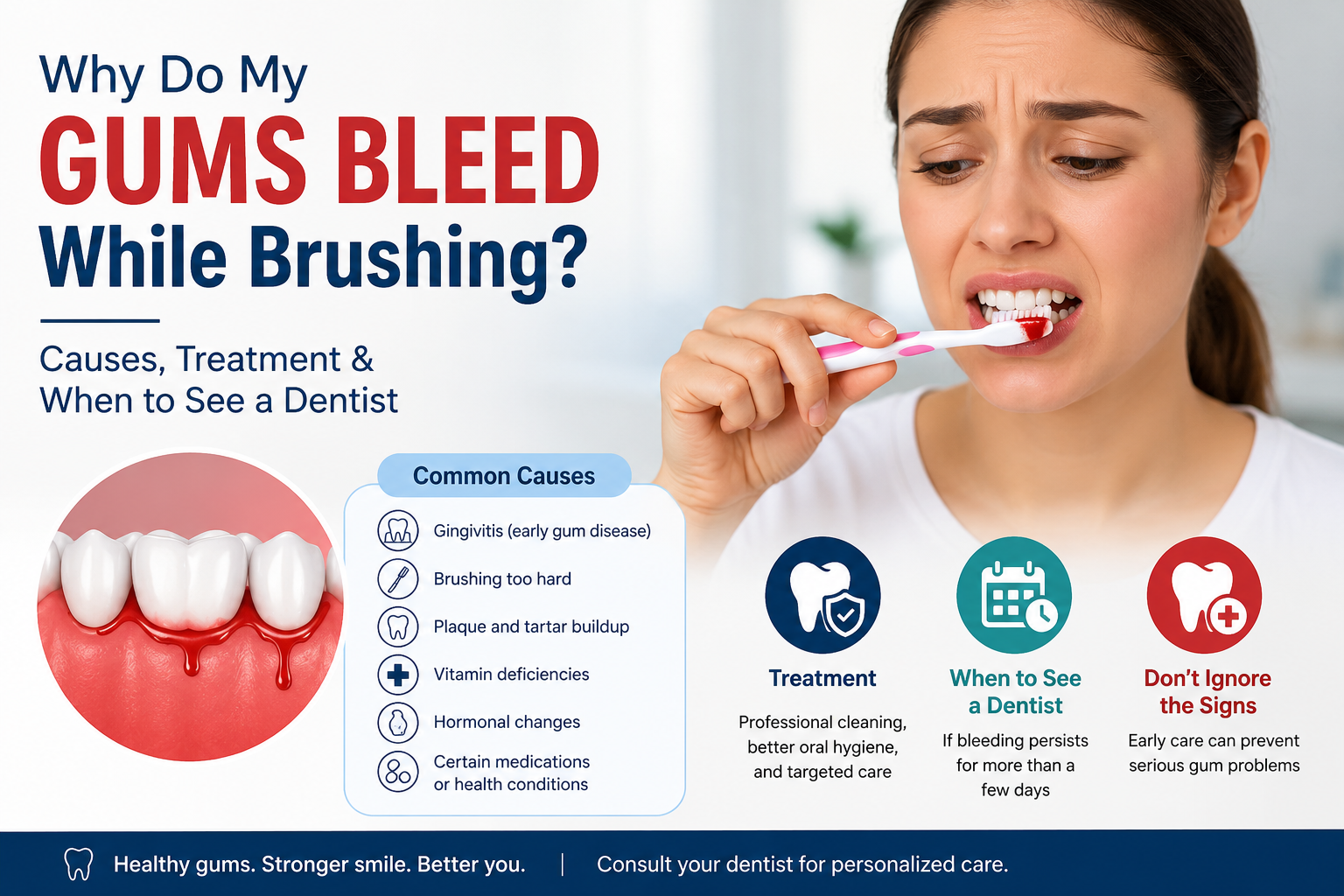
Why Do My Gums Bleed While Brushing? Causes, Treatment & When to See a Dentist
Healthy gums are the foundation of a healthy smile. They hold your teeth firmly in place, protect the bone underneath, and act as a barrier against infection. So when you spit out pink-tinged foam while brushing, it's natural to wonder if something is wrong. In most cases, it is — and it's worth paying attention to.
Gums bleed while brushing mainly because of inflammation caused by plaque buildup along the gumline. This inflammation makes the gum tissue fragile, so even gentle brushing or flossing can cause it to bleed. While an occasional spot of blood might not seem alarming, gums that bleed frequently are almost always a sign that something needs attention.
This is exactly why bleeding gums should never be ignored. Left untreated, mild gum inflammation can progress into more advanced gum disease that affects the bone supporting your teeth. If you're searching for reliable bleeding gums treatment in Bangalore, an early dental evaluation can make all the difference between a simple fix and a complicated one. As one of the trusted names offering dental care in Jayanagar, our team frequently sees patients who wish they had come in sooner. The good news: with the right diagnosis and care from a dentist in Bangalore, healthy gums are almost always achievable again — and healthier gums also support better overall health, since gum disease has been linked to heart health and blood sugar control.
What Does It Mean If Your Gums Bleed?
It's a common myth that a little bit of blood while brushing is just "normal" or happens because you brushed too hard. While overly aggressive brushing can certainly contribute, the underlying reason gums bleed is almost always inflammation.
There's an important difference between occasional and frequent bleeding. If your gums bled once after you tried a new hard-bristled brush, that's usually a technique issue. But if bleeding happens every time you brush or floss, or shows up without any clear trigger, it points to an ongoing gum health problem that deserves a proper look.
Healthy gums are pale pink, firm, and don't bleed with normal brushing pressure. Any deviation from that — bleeding, puffiness, tenderness — is your body's way of signaling that plaque and bacteria have irritated the tissue. Early evaluation matters because gum disease is far easier and less expensive to treat in its earliest stage than after it progresses.
Common Causes of Bleeding Gums
Bleeding gums rarely happen for just one reason. Understanding the underlying cause is the first step toward effective treatment.
Gingivitis
Gingivitis is the earliest and mildest form of gum disease, and the most common reason gums bleed. It develops when plaque builds up along the gumline and isn't removed through regular brushing and flossing, irritating the tissue. Gingivitis symptoms typically include red, swollen gums, tenderness, and bleeding during brushing. The reassuring part is that gingivitis is completely reversible with improved oral hygiene and a professional cleaning.
Periodontitis
When gingivitis is left untreated, it can progress into periodontitis, a more serious form of gum disease where infection spreads below the gumline and affects the bone and tissue supporting your teeth. This can lead to bone loss, gum recession, and eventually loose teeth. Periodontitis treatment is more involved than treating gingivitis, often requiring deep cleaning and ongoing periodontal maintenance.
Poor Oral Hygiene
Inconsistent brushing and flossing habits allow plaque to harden into tartar, a rough deposit only a dental professional can remove. Tartar buildup along the gumline continuously irritates gum tissue, making bleeding more likely — especially when flossing is skipped or an old, frayed toothbrush is used.
Vitamin Deficiencies
Nutrition plays a bigger role in gum health than many realize. A deficiency in Vitamin C can weaken gum tissue and blood vessels, while a lack of Vitamin K affects the blood's ability to clot properly, prolonging bleeding episodes. A diet rich in fresh fruits, vegetables, and leafy greens supports stronger gums.
Smoking and Tobacco
Smoking is one of the most significant risk factors for gum disease. Tobacco use reduces blood flow to the gums, which can mask early bleeding while the underlying infection progresses silently. Smokers also tend to have more plaque buildup and typically respond less predictably to standard gum disease treatment.
Hormonal Changes
Hormonal fluctuations during pregnancy, puberty, and menopause can increase blood flow to the gums and heighten sensitivity to plaque, making bleeding more likely even with a consistent hygiene routine. Pregnant women may notice "pregnancy gingivitis" which usually improves with careful home care but should still be monitored by a dentist.
Diabetes
There's a well-documented, two-way relationship between diabetes and gum disease. Elevated blood sugar can impair the body's ability to fight bacterial infections in the gums, making diabetics more susceptible to gingivitis and periodontitis, while untreated gum infections can in turn make blood sugar control more difficult.
Medications
Certain medications can contribute to bleeding gums as a side effect. Blood thinners, for example, reduce the blood's ability to clot, making gums bleed more easily even with mild inflammation. If you're on any regular medication and notice increased gum bleeding, mention it during your consultation so it can be factored into your treatment plan.
Early Warning Signs You Should Never Ignore
Bleeding is often just one symptom among several. Watch for these additional signs, which together point toward gum disease that needs professional attention:
- Swollen or puffy gums that look inflamed
- Red gums instead of a healthy pale pink
- Persistent bad breath that doesn't go away with brushing
- Gum recession, where teeth appear longer than before
- Loose or shifting teeth
- Increased tooth sensitivity to hot or cold
- Pain or discomfort while chewing
How Dentists Diagnose Bleeding Gums
A thorough dental consultation is the only reliable way to determine why your gums are bleeding and how far the condition has progressed. During a clinical examination, the dentist checks the color, texture, and firmness of gum tissue and looks for visible plaque or tartar buildup.
Gum pocket measurement is a key diagnostic step, using a small probe to measure the depth of the space between tooth and gum — deeper pockets typically indicate more advanced disease. Dental X-rays may also be taken to assess bone level and check for hidden bone loss not visible during a standard exam.
Your dentist will also review your medical history, since conditions like diabetes and medications like blood thinners can directly influence gum health. A dental consultation in Jayanagar 9th Block that takes this comprehensive approach ensures the treatment plan addresses the root cause rather than just the symptom.
Effective Treatments for Bleeding Gums
Professional Teeth Cleaning
For many patients, a professional teeth cleaning in Bangalore is the first and most effective step in bleeding gums treatment. This procedure removes plaque and hardened tartar from areas a toothbrush cannot reach, allowing inflamed gum tissue to heal naturally over the following days and weeks.
Scaling and Root Planing
When gum disease has progressed further, a deeper cleaning procedure called scaling and root planing is often recommended. Scaling removes plaque and tartar from below the gumline, while root planing smooths the tooth root surfaces so gum tissue can reattach more easily. This two-part deep cleaning is a cornerstone of treating moderate gum disease.
Gum Disease Treatment
Depending on the severity of the infection, your dentist may recommend antibiotics to control bacterial activity, either as a topical gel placed directly in gum pockets or as an oral medication. Laser treatment, where available, can also be used to target infected tissue with precision and support faster healing. Ongoing periodontal care, including regular maintenance visits, helps keep more advanced cases stable over time.
Improved Oral Hygiene
No professional treatment works well without consistent home care. Brushing twice daily with a soft-bristled brush, flossing once a day to clean between teeth, and using an antibacterial mouthwash all help control the plaque bacteria that cause gum inflammation in the first place.
Lifestyle Changes
Quitting smoking significantly improves the gums' ability to heal and respond to treatment. Eating a balanced diet rich in vitamins C and K supports gum tissue strength, and keeping blood sugar levels under control if you have diabetes reduces your overall risk of gum infection.
How to Prevent Bleeding Gums
Most cases of bleeding gums are preventable with consistent daily habits. Here's a simple checklist to protect your gum health and avoid the need for more involved bleeding gums treatment down the line:
- Brush twice daily with a soft-bristled toothbrush
- Floss daily to remove plaque between teeth
- Visit your dentist every six months for a checkup
- Eat a balanced diet rich in vitamins and minerals
- Avoid smoking and tobacco products
- Stay hydrated to support healthy saliva flow
- Get professional teeth cleaning to remove tartar buildup
When Should You Visit a Dentist?
While mild, occasional bleeding may resolve with better home care, certain signs mean you shouldn't wait. Visit a dentist immediately if you notice:
- Bleeding that lasts more than one week despite good oral hygiene
- Gums that remain swollen or tender
- Teeth that feel loose or have shifted position
- Persistent bad breath that doesn't improve
- Pain while chewing
- Visible gum recession
If any of these apply to you, don't delay — the best dentist in Bangalore for your situation is one who can see you promptly. Our dental clinic in Jayanagar welcomes patients seeking a timely, thorough evaluation.
Why Early Gum Disease Treatment Matters
Addressing bleeding gums early rather than waiting offers real, lasting benefits. Early treatment helps prevent tooth loss by stopping the infection before it reaches the bone supporting your teeth. It also tends to be significantly less expensive, since gingivitis can often be managed with a simple cleaning, while advanced periodontitis may require multiple deep-cleaning sessions or surgical intervention.
Treating gum disease early also helps preserve naturally healthy gum tissue and supports better long-term oral health overall, reducing your risk of future dental problems. Beyond your mouth, there's growing evidence linking gum disease to systemic health issues such as cardiovascular disease and complications with diabetes management. Choosing timely bleeding gums treatment in Bangalore isn't just about your smile — it's an investment in your overall wellbeing.
Conclusion
Bleeding gums are a common concern, but they're rarely something to brush off. Whether the cause is early-stage gingivitis, more advanced periodontitis, poor oral hygiene, vitamin deficiencies, smoking, hormonal changes, diabetes, or medication side effects, the underlying message is the same: your gums are asking for attention.
The encouraging part is that most cases respond well to treatment, especially when caught early. From professional teeth cleaning and scaling and root planing to improved daily habits and lifestyle changes, there are clear, effective paths back to healthy gums.
If you've noticed blood while brushing or flossing, don't wait for it to become a bigger problem. Book a dental consultation in Jayanagar 9th Block today, and let our experienced team provide the bleeding gums treatment in Bangalore you need to protect your smile for years to come. As the best dentist in Bangalore for gum health concerns, we're here to help you every step of the way.
Frequently Asked Questions
Gums typically bleed while brushing due to plaque buildup along the gumline, which causes inflammation known as gingivitis. This makes gum tissue fragile and prone to bleeding even with gentle brushing. Other contributing factors include poor oral hygiene, smoking, hormonal changes, diabetes, vitamin deficiencies, and certain medications like blood thinners.
The best treatment depends on severity. Mild cases often improve with a professional teeth cleaning and better home care. More advanced gum disease may require scaling and root planing, a deep-cleaning procedure, along with ongoing periodontal maintenance. A dental evaluation determines the right approach for your specific situation.
Visit a dentist if bleeding continues for more than a week, or if you notice swollen gums, loose teeth, persistent bad breath, gum recession, or pain while chewing. Early evaluation prevents mild inflammation from progressing into more serious, harder-to-treat gum disease.
Gums usually bleed when brushing because of plaque buildup along the gumline, which irritates the tissue and causes inflammation known as gingivitis. This makes the gums fragile and more likely to bleed, even with light brushing pressure. Other contributing factors include incorrect brushing technique, smoking, hormonal changes, and certain medications. If bleeding continues for more than a few days, it's best to get a dental evaluation to identify the exact cause.
Yes, in most cases, bleeding gums are an early sign of gum disease, specifically gingivitis, the mildest and most reversible stage. It occurs when plaque bacteria inflame the gum tissue. While occasional bleeding from a hard toothbrush may not indicate disease, frequent or ongoing bleeding almost always points to gum inflammation that needs professional evaluation and treatment before it progresses further.
Yes, professional teeth cleaning is often highly effective at stopping bleeding gums, especially in early-stage gum disease. Cleaning removes plaque and hardened tartar deposits that a toothbrush can't reach, eliminating the source of gum irritation. Once these irritants are removed, inflamed gum tissue typically begins healing within days to weeks, and bleeding gradually stops, provided good oral hygiene is maintained afterward.
You can prevent bleeding gums naturally by brushing twice daily with a soft-bristled brush, flossing once a day, and eating a diet rich in vitamin C and vitamin K to support gum strength. Staying hydrated, avoiding tobacco, and managing blood sugar levels if you have diabetes also significantly reduce your risk. Regular dental checkups every six months help catch early inflammation before it worsens.
Yes, if left untreated, bleeding gums caused by gum disease can eventually lead to tooth loss. As gingivitis progresses into periodontitis, the infection damages the bone and connective tissue supporting your teeth, causing them to loosen and shift. Early diagnosis and treatment significantly reduce this risk, which is why persistent bleeding should never be ignored.