
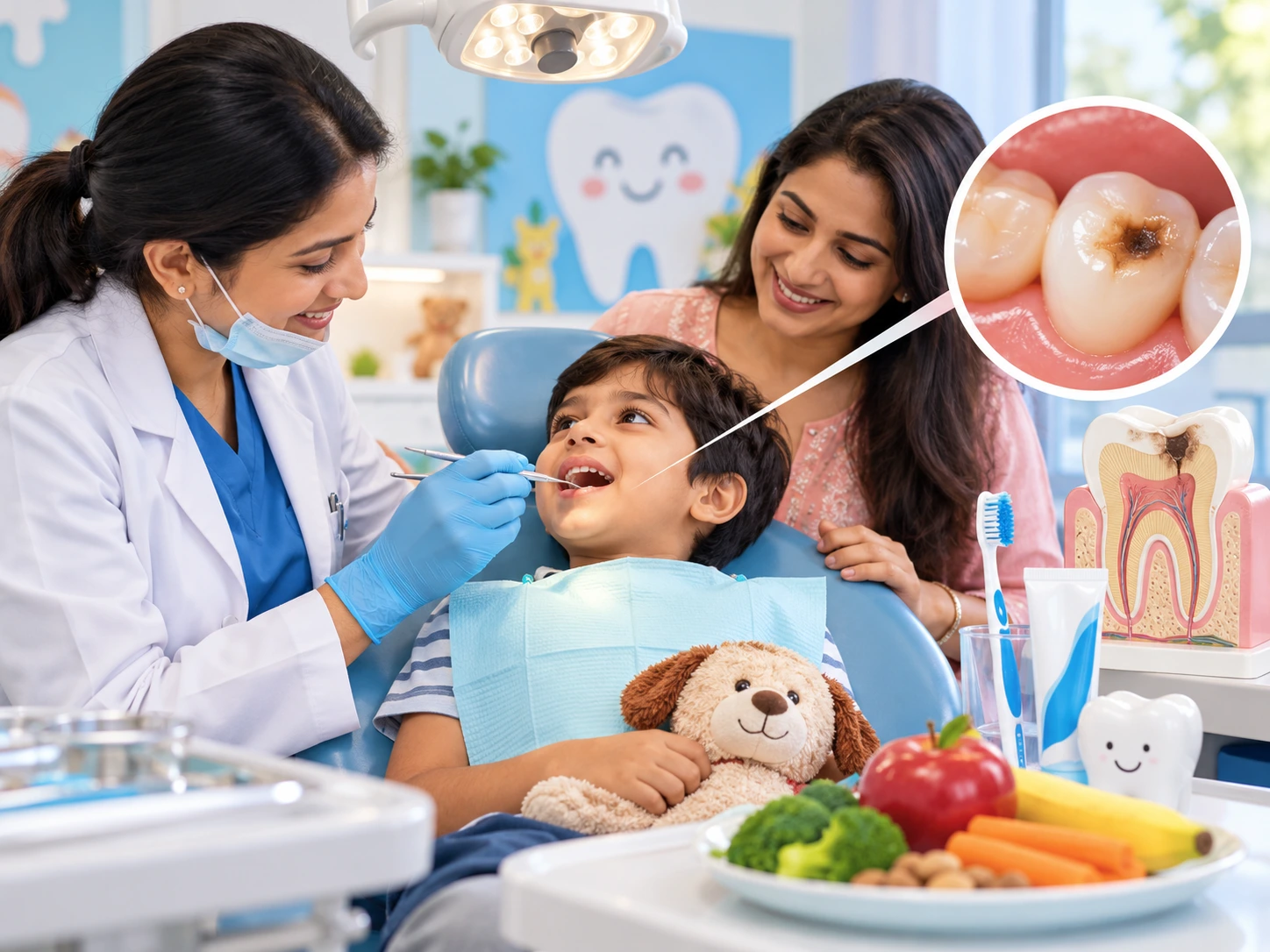
Dental Decay in Kids: Prevention Is Better Than Cure – A Parent’s Guide to Healthy Teeth
Baby teeth may be temporary, but they are important. They help your child chew food, speak clearly, and hold space for the permanent teeth that are embedded underneath. Yet tooth decay in children is common, and it can begin soon after the first tooth appears.
When a baby tooth develops a cavity, the effects reach far beyond the tooth. A child may eat less, sleep poorly, feel irritable, or avoid certain foods. The difficulty is that early decay is often painless, so it can go unnoticed until a white chalky spot turns brown or a toothache begins.
That is why child dental care works best when it focuses on prevention. Small daily habits, plus an early dental assessment, makes a real difference. If you live in South Bangalore, a pediatric dental clinic in Jayanagar can check your child’s teeth, explain their cavity risk, and guide you on brushing, feeding and diet. This guide covers causes, early signs, prevention and treatment in plain language.
What Is Tooth Decay in Children?
Tooth decay is acid damage to the tooth. Plaque, the soft, sticky film on teeth, contains bacteria. When your child eats or drinks sugary or starchy foods, these bacteria produce acids that slowly dissolve minerals from enamel, the hard outer layer of the tooth.
The first stage is early enamel damage, often seen as a dull white or chalky patch. The surface is still intact, and fluoride toothpaste with fewer sugar exposures can sometimes help it recover. Once the surface breaks and a hole forms, it is an established cavity, which brushing alone cannot repair.
Young children are more vulnerable because baby tooth enamel is thinner than adult enamel, and small hands cannot clean them thoroughly.
Common Causes of Cavities in Kids
Several factors usually work together, and none of them means a parent has failed.
Frequent Sugary Snacks and Drinks
Biscuits, sweets, packaged juices and sweetened drinks deposit to form plaque that feed the bacteria. How often matters as much as how much is consumed. Each exposure starts as an acid attack, so a lollipop sucked slowly over an hour is harder on teeth than a sweet eaten with a meal.
Poor Brushing Habits
Rushed or irregular brushing leaves plaque behind, especially along the gumline and on back teeth. Young children rarely brush well alone and usually need help.
Baby Bottle Tooth Decay
Baby bottle tooth decay affects infants and toddlers. It is linked to long or frequent contact between teeth and milk, formula milk, juice or other sugary liquids, especially when a baby falls asleep with a bottle. Breast milk and formula are important nutrition, and feeding does not automatically cause cavities. The risk comes from prolonged contact combined with teeth that are not cleaned. Your dentist can advise on feeding and cleaning routines suited to your baby’s age.
Not Cleaning Baby Teeth Early Enough
Oral hygiene should start before the first tooth appears. Wiping the gums with a clean, damp cloth after feeding is a good habit.
Other Contributing Factors
Too little fluoride, enamel defects present from early development, dry mouth caused by certain medicines, and limited access to preventive dental care can also play a part.
Early Signs of Tooth Decay in Children Parents Should Notice
Early decay may not hurt, so don’t wait for your child to complain. Look out for:
- White or chalky spots on teeth
- Brown or black spots
- Visible holes or pits
- Sensitivity to cold, hot or sweet foods
- Toothache or discomfort while eating
- Chewing mostly on one side
- Food repeatedly getting stuck in a damaged tooth
- Gum swelling or signs of infection in advanced cases
Facial swelling, fever along with dental symptoms, or difficulty swallowing or breathing needs urgent medical or dental assessment. Trouble breathing or swallowing is an emergency, so go to the nearest hospital.
How to Prevent Tooth Decay in Children
How to prevent tooth decay in children: clean teeth twice daily with the right amount of fluoride toothpaste, limit frequent sugary snacks and drinks, avoid bedtime bottles with sugary liquids, and arrange regular dental checkups. These steps lower risk, though no routine can guarantee a child will never have a cavity.
Start Oral Hygiene Early
Gently clean your infant’s gums before teeth appear. Start brushing as soon as the first tooth erupts, using a soft, age-appropriate toothbrush. Help your child brush until they can do it well on their own.
Use Fluoride Toothpaste Correctly
Fluoride strengthens enamel and helps prevent decay. For children under three, use a smear about the size of a grain of rice. From three to six years, use a pea-sized amount toothpaste. Supervise brushing and encourage spitting rather than swallowing. Avoid home remedies or extra fluoride products unless your dentist advises them.
Build Healthy Eating Habits
- Keep sugary snacks and drinks to mealtimes where possible
- Offer water regularly
- Choose balanced meals and tooth-friendly snacks
- Avoid long sipping of sugary drinks
- Limit sticky sweets
Fruit does not need to be avoided. A balanced diet with sensible eating patterns is the goal.
Prevent Baby Bottle Tooth Decay
Don’t put a baby to sleep with a bottle of juice or other sugary drinks. Clean your baby’s gums or teeth before bed, and ask a professional about feeding and cleaning routines for your baby’s age.
Schedule Regular Dental Checkups
Routine examinations allow early detection and personalised advice. Children should generally have a first dental visit by their first birthday or within six months of the first tooth appearing, whichever comes first. Many parents look for a children’s dental checkup in Bangalore close to home, and a dental clinic in Jayanagar offers one option for families in the south of the city. A pediatric dental clinic in Jayanagar can also set a checkup schedule based on your child’s cavity risk.
Ask About Professional Preventive Treatments
Depending on age, cavity risk and tooth development, a dentist may suggest fluoride varnish or dental sealants. Sealants are thin protective coatings placed on the chewing surfaces of back teeth. These treatments complement daily brushing and healthy habits and do not replace them.
Home checklist for parents
- Brush twice daily with the correct amount of fluoride toothpaste
- Supervise brushing and encourage spitting
- Keep sweets and sweetened drinks to mealtimes
- Offer water between meals
- Avoid sugary drinks in bedtime bottles
- Keep regular dental appointments
Why Baby Teeth Need Proper Dental Care
Good children’s dental care protects more than the teeth themselves. Baby teeth help children chew and get proper nutrition, support speech development, hold space for permanent teeth, guide normal oral development, and contribute to comfort and confidence when smiling.
Untreated decay can progress to pain, infection and early tooth loss. Treatment, however, is not the same for every tooth. It depends on your child’s age, the tooth involved, the extent of decay and the dentist’s clinical findings.
Treatment Options for Tooth Decay in Children
Treatment depends on how advanced the decay is and whether the tooth can be saved.
Fluoride Treatment for Early Enamel Damage
For early lesions, a dentist may suggest fluoride treatment or other non-invasive care along with improved home habits. A formed cavity generally cannot be repaired by brushing or fluoride toothpaste alone.
Dental Fillings
Fillings restore a tooth damaged by a cavity by removing the decayed part and sealing the space.
Pulp Treatment for Deep Cavities
When decay reaches the pulp, the soft inner part of a baby tooth, some cases need pulp treatment. It manages infection or inflammation and may let the tooth stay in place.
Stainless Steel Crowns or Other Dental Crowns
Crowns, which are protective caps, may be recommended for badly damaged baby teeth or after certain pulp treatments.
Tooth Removal When Necessary
Extraction may be considered when a tooth cannot be restored or when clinical circumstances require it. The dentist may then assess whether a space maintainer is needed to hold room for the permanent tooth.
No specific treatment can be recommended without an examination. Whether you see a pediatric dentist in Bangalore or a kids dentist in Bangalore closer to home, ask about benefits, risks, alternatives and follow-up.
When Should Parents Take Their Child to a Dentist?
Book an appointment if:
- White, brown or black spots appear
- Your child complains of pain or sensitivity
- Eating or brushing causes discomfort
- A cavity is visible
- Gums swell or bleed around a damaged tooth
- Dental problems keep recurring
- Your child hasn’t had a first dental visit
Spots, mild sensitivity or a visible hole need prompt assessment, though not an emergency. Facial swelling, fever with dental symptoms, or difficulty swallowing or breathing needs urgent care.
A dental consultation in Jayanagar can help you work out what is happening and what to do next. Parents often search for the best dentist in Jayanagar, but “best” is subjective. A dentist who examines carefully, explains clearly and suits your child matters more than a ranking. A pediatric dental clinic in Jayanagar can also reassure you if your concern turns out to be minor.
Choosing the Right Pediatric Dental Care in Jayanagar
Whichever clinic you consider, look for:
- Experience and training in treating children
- A child-friendly, reassuring approach
- Clear explanations of treatment options
- Appropriate infection-control practices
- Preventive care and guidance for parents
- Transparent discussion of costs and follow-up
- Willingness to explain risks, benefits and alternatives
Visiting a dental clinic in Jayanagar before booking helps you see whether the atmosphere suits your child. Ask who treats children and how often, as you would with any pediatric dentist in Bangalore.
The Dentist Bangalore website (operating as Infinit Dental Solutions, Jayanagar 9th Block) lists child care dentistry, including check-ups, fluoride application and pit and fissure sealants, and a team member trained in pedodontics and preventive dentistry. Confirm current services and fees with the clinic directly.
Benefits of Early Dental Consultation
An early dental consultation in Jayanagar, or a children’s dental checkup in Bangalore wherever you live, may help you to:
- Identify early decay
- Stop existing problems from becoming more extensive
- Preserve natural teeth where possible
- Learn proper brushing and fluoride use
- Receive personalised diet and hygiene advice
- Reduce the risk of avoidable pain and infection
- Plan treatment before symptoms worsen
Early care often makes treatment simpler, but outcomes and costs vary from child to child.
Conclusion – Start Early for a Healthier Smile
Tooth decay in children develops when plaque bacteria, frequent sugar exposure and gaps in cleaning combine. Early signs, such as white patches or small spots, are easy to miss, so don’t wait for pain. Daily supervised brushing with fluoride toothpaste, sensible eating patterns, safe bottle habits and regular dental visits all help protect baby teeth. When decay does appear, early treatment can often keep the tooth in place and the problem small.
Healthy habits are easiest to build from infancy, long before a child has opinions about toothpaste. If you’ve noticed a spot or a change in your child’s teeth, or simply want guidance, consider arranging a dental consultation in Jayanagar. A pediatric dental clinic in Jayanagar where Dr.Deepali K J , a child specialist can examine your child, answer your questions and help you plan a routine that suits your family. A calm, early visit usually makes the next one easier.
Dr. Shambhu H S and Dr. Arati Talikoti at Infinit Dental Solutions, Jayanagar, Bangalore, provide dental care in areas such as dental implants, cosmetic dentistry, crowns and bridges, and smile restoration. Their focus is on helping patients understand their dental concerns and choose suitable treatment options.
Frequently Asked Questions:
Tooth decay starts when bacteria in plaque feed on sugars from food and drink and produce acids that wear away enamel. The risk rises when children snack or sip sugary drinks often, when brushing is irregular or ineffective, and when fluoride exposure is low. Other factors include enamel defects, dry mouth from some medicines, and limited access to preventive dental care. Usually several factors combine, so decay is not a sign of poor parenting. A dentist can look at your child’s habits and suggest practical changes.
Brush twice a day with a fluoride toothpaste suited to your child’s age, and help or supervise until your child can brush well alone. Keep sugary snacks and drinks to mealtimes where possible, and offer water between meals. Avoid putting a baby to bed with a bottle of juice or other sugary drinks. Schedule regular dental visits so a dentist can spot early changes and advise on fluoride varnish or sealants if needed. No method guarantees a child will never get a cavity, but these steps lower the risk.
Early signs include white or chalky patches, brown or black spots, small pits or visible holes, and sensitivity to cold, hot or sweet foods. Some children complain of pain when eating or avoid chewing on one side. However, decay can develop without any obvious symptoms, especially in the early stages, so regular dental checkups are important. If you see swelling of the face or gums, or your child has fever along with a toothache, seek prompt dental or medical care.
Baby bottle tooth decay is decay in the teeth of infants and toddlers, often affecting the upper front teeth. It is linked to long or frequent contact between teeth and milk, formula, juice or other sugary liquids, especially when a baby sleeps with a bottle. Breast milk and formula remain important for infant nutrition. To lower the risk, wipe your baby’s gums and clean teeth after feeds and before bed, avoid sugary drinks in the bottle, and ask your dentist about age-appropriate feeding and cleaning routines.
Recognised pediatric dental guidance recommends the first dental visit by your child’s first birthday or within six months after the first tooth appears, whichever comes first. This early visit lets the dentist check how teeth and jaws are developing, look for early signs of decay, and show you how to clean your child’s teeth and use fluoride. It also helps your child become comfortable in the dental setting. Your child should not wait for a toothache before the first appointment.
Sometimes. Early enamel damage, seen as white or chalky spots, can occasionally be arrested or remineralised with fluoride, good brushing and fewer sugar exposures, but this needs a dentist’s assessment and monitoring. Once enamel has broken down and a cavity has formed, it will not heal on its own and brushing or home remedies cannot repair it. Such cavities generally need professional assessment and may need a filling or other treatment, depending on the child’s age and the tooth involved. Leaving them untreated can lead to pain and infection.
Yes, when used in the right amount, fluoride toothpaste is safe and helps strengthen enamel and prevent cavities. For children under three, use a smear about the size of a grain of rice. From ages three to six, use a pea-sized amount. Supervise brushing, encourage your child to spit rather than swallow, and store toothpaste out of reach. Your dentist can advise if your child needs a different approach, for example based on cavity risk or local water fluoride levels.
Look for a clinic that treats children regularly, explains things in simple words, and focuses on prevention as well as treatment. Ask how they help anxious children, what infection-control practices they follow, and whether they discuss options, risks and costs before treatment. When you search for a pediatric dental clinic in Jayanagar, preferable try to visit if possible, read the clinic’s information on child care dentistry, and compare more than one provider rather than relying on rankings or advertisements alone.
Tooth decay in children happens when bacteria in plaque turn sugars from food and drink into acids that damage enamel. Frequent sugary snacks or drinks, inadequate brushing, low fluoride exposure, enamel defects and dry mouth can raise the risk. Usually several factors combine, which makes it clear that decay is not simply the result of poor parenting.
Parents can lower the risk of dental problems by cleaning gums and teeth from infancy, brushing twice daily with an age-appropriate amount of fluoride toothpaste under supervision, limiting frequent sugary snacks and drinks, avoiding sugary liquids in bedtime bottles, and arranging regular dental checkups. These habits reduce risk but cannot guarantee a child will never get a cavity.
A child should have a first dental visit by their first birthday or within six months of the first tooth, whichever comes first. See a dentist promptly for white, brown or black spots, holes, sensitivity or pain. Facial swelling, fever with dental symptoms, or trouble swallowing or breathing needs urgent care; breathing or swallowing difficulty is an emergency.