Invisalign vs Traditional Braces: Which Option Is Right for Adults and Teenagers?
Introduction
Orthodontic treatment has come a long way. What was once a straightforward choice — a fixed set of metal braces — has evolved into a range of options that can be tailored to your lifestyle, dental needs, and personal preferences. Today, more adults than ever before are seeking teeth straightening treatment, and teenagers have more choices available to them than any previous generation.
The most significant shift in recent years has been the rise of Invisalign and clear aligners. For many patients, the idea of straightening teeth without obvious brackets and wires is understandably appealing. But traditional braces remain a highly effective and often essential solution for more complex orthodontic cases.
Deciding between the two is not always simple. At our dental clinic in Jayanagar, patients frequently ask which option suits them better — and the honest answer is that it depends on your specific dental condition, your daily lifestyle, and your treatment goals. This guide, put together by our team of experienced orthodontists, walks you through everything you need to know to make an informed decision. Whether you are a working professional, a parent weighing options for your teenager, or someone who has been putting off orthodontic care for years, this is your complete reference.
Invisalign vs Traditional Braces
Invisalign uses custom-made, removable clear aligners to gradually shift teeth into position — ideal for adults and teens seeking a discreet, flexible option. Traditional braces use fixed metal or ceramic brackets and wires, offering greater control over complex tooth movements. The right choice depends on the severity of your orthodontic issue, your lifestyle, and your compliance level. A consultation with a qualified orthodontist is the most reliable way to determine which treatment suits you.
What Is Invisalign?
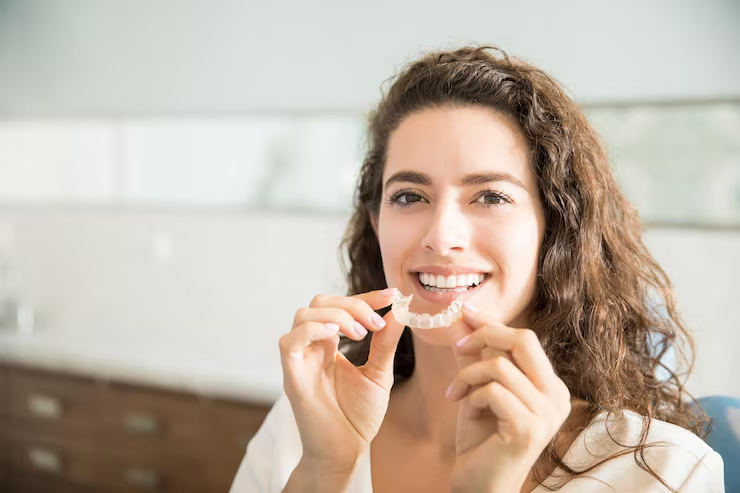
Invisalign is a system of clear, removable plastic aligners custom-fabricated for each patient using digital impressions and 3D treatment planning technology. Each set of aligners applies gentle, controlled pressure to shift teeth gradually into the desired position. Patients progress through a series of aligners — typically changing to a new set every one to two weeks — over the course of their treatment.
One of the defining characteristics of Invisalign is that the aligners are nearly invisible when worn, making them a popular choice for adults who prefer a more discreet orthodontic option. They are also fully removable, which means patients can take them out for meals, brushing, flossing, and special occasions.
Invisalign is most effective for mild to moderate orthodontic issues, including crowding, spacing, and certain bite problems. Suitable candidates include adult professionals, responsible teenagers, and anyone with good overall oral health who is committed to wearing aligners for the recommended 20–22 hours per day.
What Are Traditional Braces?
Traditional braces consist of metal or ceramic brackets bonded to the front surfaces of the teeth, connected by wires and adjusted periodically by an orthodontist. The wire applies consistent pressure over time, guiding teeth into the correct position in a controlled, precise manner.
Metal braces are the most common type — durable, cost-effective, and highly effective for a broad range of orthodontic issues, from mild crowding to complex jaw misalignment.
Ceramic braces use tooth-coloured or clear brackets that blend more naturally with the teeth, offering a cosmetically improved appearance while retaining the mechanical effectiveness of traditional braces. They tend to cost slightly more than metal braces and can be more prone to staining if dietary habits are not managed carefully.
Traditional braces are typically recommended for complex orthodontic cases, including significant crowding, severe bite problems such as overbite, underbite, or crossbite, and cases requiring precise tooth rotation or vertical movement.
Invisalign vs Traditional Braces — Key Differences
Appearance
Invisalign aligners are virtually invisible when worn, making them the preferred choice for patients who are self-conscious about the look of orthodontic treatment. Traditional metal braces are clearly visible, while ceramic braces offer a middle ground. For adults in professional or social settings, this distinction often weighs heavily in the decision.
Comfort
Invisalign aligners are smooth-edged and do not involve wires or brackets that can irritate the cheeks and gums. Patients may experience mild pressure or discomfort when transitioning to a new aligner set, but this typically subsides within a day or two. Traditional braces can cause more discomfort following tightening appointments, and bracket edges may occasionally cause soft tissue irritation.
Treatment Duration
Treatment length varies by case complexity. Invisalign treatment typically takes 12 to 18 months for mild to moderate cases. Traditional braces are worn for 18 months to 3 years on average. In some situations, braces can achieve results faster because they provide greater biomechanical control.
Oral Hygiene
Maintaining good oral hygiene is significantly easier with Invisalign, as the aligners can be removed for brushing and flossing. With traditional braces, cleaning around brackets and wires requires additional tools and care, and inadequate cleaning can lead to plaque build-up, staining, or early decay.
Dietary Restrictions
Invisalign patients can eat and drink whatever they like — simply remove the aligners first. Traditional braces come with a list of foods to avoid: hard foods like raw carrots and nuts, sticky foods like toffee, and anything that could dislodge brackets or bend wires.
Effectiveness
For complex orthodontic problems — severe crowding, significant bite correction, rotation of teeth, or jaw alignment issues — traditional braces generally offer greater precision and control. Invisalign has improved substantially and can now address a wider range of cases than earlier versions of the system, but its limitations remain most apparent in severe or complicated presentations.
Cost Considerations
The cost of both treatments varies based on case complexity, treatment duration, and the specific practice. In most cases, Invisalign is priced at a comparable level to traditional braces or slightly higher. Ceramic braces fall between metal braces and Invisalign in terms of cost. Your orthodontic consultation will include an accurate treatment estimate based on your individual case.
Follow-Up Visits
Invisalign typically requires fewer in-office visits than traditional braces. Patients collect batches of aligner sets and check in with their orthodontist every six to eight weeks. Traditional braces require adjustment appointments every four to six weeks throughout treatment.
Comparison at a Glance
| Feature | Invisalign | Traditional Braces |
|---|---|---|
| Visibility | Nearly invisible | Clearly visible (metal); subtle (ceramic) |
| Removable | Yes | No |
| Comfort | Generally comfortable | Can cause irritation after adjustments |
| Oral hygiene | Easier | Requires extra care |
| Dietary restrictions | None | Multiple restrictions |
| Best for | Mild–moderate cases | Moderate–complex cases |
| Appointment frequency | Every 6–8 weeks | Every 4–6 weeks |
| Treatment duration | 12–18 months (typical) | 18–36 months (typical) |
Is Invisalign Better for Adults?
For many adults, Invisalign is the more practical and preferred choice — and it is easy to understand why. Professional environments often make traditional braces feel conspicuous or awkward, and the ability to remove aligners for client meetings, presentations, or social events provides a level of confidence that fixed braces simply cannot match.
Adults also tend to be more disciplined about wearing their aligners for the required 20–22 hours per day, which is a significant compliance factor in achieving good results. The absence of dietary restrictions is another meaningful advantage for adults with busy lifestyles who travel frequently or regularly eat out.
That said, Invisalign for adults is most effective when the orthodontic issue is mild to moderate in nature. For adults with more complex dental problems — severe misalignment, significant bite issues, or teeth that require precise rotational control — a consultation with a cosmetic dentist in Jayanagar will help determine whether Invisalign is clinically appropriate or whether braces would deliver more reliable results.
Are Traditional Braces Better for Teenagers?
For teenagers, the decision involves a few more variables. The most important of these is compliance. Invisalign requires teenagers to be disciplined about wearing their aligners consistently — something that is not always guaranteed in this age group. Leaving aligners out for extended periods will delay or compromise treatment outcomes.
Traditional braces do not rely on patient compliance in the same way. Because they are fixed in place, they work around the clock regardless of the patient's habits. This makes them a more predictable option for teenagers who may struggle with the responsibility of managing removable aligners.
Additionally, teenagers with more complex orthodontic needs — severe crowding, significant bite problems, or cases requiring detailed tooth-level control — often achieve better outcomes with braces. Orthodontic treatment during the teenage years takes advantage of ongoing jaw growth and development, and an experienced orthodontist in Jayanagar can use this growth window strategically with traditional braces to achieve long-lasting corrections.
Invisalign does offer a Teen-specific version with compliance indicators built in, which can help both patients and parents monitor wearing time. For responsible teenagers with mild to moderate alignment concerns, it can be an excellent option.
Who Is the Ideal Candidate for Invisalign?
Invisalign works best for patients who present with:
- Mild crowding or spacing issues
- Minor bite irregularities such as mild overbite or underbite
- Teeth that require straightening rather than significant rotation or vertical movement
- Adults in professional environments who prioritise discretion
- Responsible teenagers with mild to moderate alignment concerns and strong compliance habits
- Anyone committed to wearing aligners for the recommended 20–22 hours per day
When Are Traditional Braces Recommended?
Traditional braces are typically the preferred choice when:
- Crowding is moderate to severe
- Significant bite correction is required (overbite, underbite, crossbite, open bite)
- Individual teeth need precise rotational or vertical movement
- Jaw alignment concerns are part of the orthodontic plan
- The patient is a younger teenager who may struggle with aligner compliance
- A previous orthodontic treatment has relapsed and more controlled correction is needed
Benefits of Orthodontic Treatment Beyond Appearance
Whether you choose Invisalign or traditional braces, the benefits of orthodontic treatment extend far beyond a straighter smile. Teeth that are properly aligned are meaningfully easier to clean — reducing the risk of plaque accumulation, cavities, and gum disease over the long term.
Bite correction improves chewing efficiency, which has a direct impact on digestion and nutrition. Poorly aligned teeth can also place uneven stress on the jaw joint, contributing to jaw pain, headaches, and accelerated tooth wear. Correcting alignment reduces these risks.
Beyond the physical benefits, a confident smile has a well-documented positive impact on self-esteem, social interaction, and professional confidence. Many patients report that completing orthodontic treatment is one of the most worthwhile investments they have made in their overall health and quality of life.
How to Choose Between Invisalign and Braces
The most important step in choosing between Invisalign and traditional braces is a thorough clinical evaluation. Your orthodontic records — including X-rays, digital scans, and photographs — provide the information needed to assess the type and complexity of your alignment issue and determine which treatment can achieve your goals most effectively.
Beyond the clinical picture, consider the following:
- Lifestyle: Do you need to remove your orthodontic appliance regularly for professional or social reasons? Invisalign is likely a better fit. Are you comfortable with something fixed that works in the background without daily management? Braces may suit you.
- Compliance: Are you or your teenager genuinely committed to wearing aligners for 20–22 hours a day? If there is any doubt, braces may deliver more consistent results.
- Budget: Both options represent a significant investment. Discuss the full cost breakdown with your clinic, including any follow-up or refinement costs.
- Treatment goals: Are you primarily correcting mild crowding for aesthetic reasons, or do you have functional bite concerns that require more complex movement? The clinical complexity of your case often makes the decision clearer.
Both the best dentist in Jayanagar and an orthodontist in Jayanagar at our clinic are available to guide you through this evaluation with honesty and clinical expertise — recommending the option that is right for your specific situation, not simply the most convenient one.
Why Professional Orthodontic Consultation Matters
No amount of online research replaces a proper clinical assessment. Orthodontic treatment is not one-size-fits-all, and self-diagnosing your suitability for Invisalign or braces based on general information can lead to unrealistic expectations or disappointment with outcomes.
A professional consultation at our dental clinic in Jayanagar includes a full assessment of your teeth, gums, bite, and jaw relationship. Digital smile simulation tools allow you to visualise potential outcomes before committing to treatment. Your orthodontist will also assess your overall oral health — any active decay or gum disease must be treated before orthodontic treatment can begin.
Most importantly, a professional consultation gives you the opportunity to ask questions, understand your options fully, and make a decision you are confident in.
Conclusion
Both Invisalign and traditional braces are proven, effective orthodontic treatments — each with distinct strengths. Invisalign offers discretion, comfort, and lifestyle flexibility that is particularly well-suited to adults and disciplined teenagers with mild to moderate concerns. Traditional braces provide the mechanical precision and reliability needed for more complex corrections, and remain the recommended choice when compliance or case complexity is a concern.
The right treatment is the one that matches your clinical needs, fits your lifestyle, and is delivered by an experienced, trusted dental team. A straightened smile is not just about aesthetics — it is an investment in your oral health, your confidence, and your long-term quality of life.
Take the first step today. Book an orthodontic consultation with our experienced team at Dentist Bangalore. As the trusted dentist in Jayanagar, we provide comprehensive, personalised orthodontic care for adults and teenagers alike. The best dentist in Jayanagar is ready to help you achieve the smile you deserve — call us or book your appointment online today.
Frequently Asked Questions
Invisalign is a system of custom-made, removable clear plastic aligners that gradually shift teeth into the correct position. Each aligner is worn for one to two weeks before progressing to the next. The aligners are nearly invisible, can be removed for eating and cleaning, and are suitable for mild to moderate orthodontic cases in adults and teenagers.
Neither option is universally better — both are effective in the right clinical context. Invisalign excels in aesthetics, comfort, and convenience, making it popular among adults and image-conscious teenagers. Traditional braces offer more precise control over complex tooth movements and are generally more reliable when patient compliance cannot be guaranteed. The best choice depends on the severity of your orthodontic issue, your lifestyle, and your personal priorities.
Invisalign treatment duration varies depending on the complexity of the case. For mild to moderate concerns, treatment typically takes between 12 and 18 months. Some straightforward cases may be completed in as few as six months, while more involved treatments can take up to two years. Wearing aligners for the full recommended 20–22 hours per day is essential for staying on schedule.
Yes, Invisalign offers a Teen-specific version designed for younger patients. It includes compliance indicators that change colour to show how long aligners have been worn, and extra replacement aligners for any that are lost or damaged. Invisalign Teen works well for teenagers with mild to moderate alignment issues who are responsible and motivated. For teenagers with complex orthodontic needs or known compliance challenges, traditional braces are often recommended.
Traditional braces can be more effective than Invisalign in specific situations — particularly for complex cases involving severe crowding, significant bite issues such as overbite or underbite, or teeth requiring precise rotational movement. For mild to moderate cases, Invisalign can achieve results comparable to braces. A clinical evaluation is the only reliable way to determine which is more effective for your situation.
Invisalign is generally considered more comfortable than traditional braces. Patients may experience mild pressure or slight discomfort for one to two days when transitioning to a new set of aligners, as the teeth are being moved. Unlike braces, there are no wires or brackets to cause irritation to the soft tissues of the mouth. Most patients find the discomfort manageable and much less intrusive than they initially expected.
The cost of both treatments varies depending on the complexity of the case, treatment duration, and the specific dental clinic. In general, metal braces tend to be the most affordable option, followed by ceramic braces, with Invisalign typically at a comparable or slightly higher price point. Some practices offer payment plans or EMI options to make treatment more accessible. For an accurate cost estimate, book a consultation with our orthodontist in Jayanagar.
With Invisalign, in-clinic visits are typically required every six to eight weeks to monitor progress, receive the next batch of aligners, and make any necessary adjustments. With traditional braces, appointments are generally scheduled every four to six weeks for wire adjustments and progress checks. Attending all scheduled appointments is important for achieving the best possible outcome.
The most reliable way to determine the right treatment is to schedule a professional orthodontic consultation. Your dentist or orthodontist will take X-rays and digital scans, assess the complexity of your alignment issues, and discuss your lifestyle, preferences, and budget. Factors such as the severity of crowding, bite alignment, your commitment to wearing removable aligners, and your aesthetic priorities will all inform the recommendation. There is no substitute for a personalised clinical evaluation with a qualified professional.