
How to Know If You Need a Root Canal Treatment? 10 Warning Signs
Tooth pain has a way of being easy to ignore — until it isn't. Sometimes it's a fleeting twinge that fades on its own, and sometimes it's a signal that something deeper is happening inside the tooth. At the centre of every tooth is a soft tissue called the pulp, containing nerves and blood vessels. When this pulp becomes inflamed or infected, usually due to deep decay, trauma, or repeated dental work, root canal treatment may be recommended to remove the affected tissue and preserve the tooth.
That said, not every toothache points to a root canal. Sensitivity, mild discomfort, or occasional pain can have several causes, some far simpler to treat. The only reliable way to know what's actually going on is a dental examination, often supported by an X-ray. This guide walks through ten warning signs worth paying attention to, explains why they happen, and outlines what root canal treatment in Banashankari actually involves — so that if you do need a dental consultation in Banashankari, you'll know what to expect and what questions to ask.
Quick Answer: How Do You Know If You Need a Root Canal?
Possible warning signs include persistent or severe tooth pain, prolonged sensitivity to hot or cold, pain while chewing, swollen gums, a pimple-like bump on the gums, tooth discoloration, or tenderness around a tooth. None of these symptoms alone confirms that a root canal is needed — only a dentist can determine this after examining the tooth and reviewing an X-ray.
What Is Root Canal Treatment?
Every tooth has an outer layer of enamel and dentin protecting a softer inner core called the dental pulp, which contains nerves and blood vessels. When decay, a crack, or trauma allows bacteria to reach the pulp, it can become inflamed or infected — a condition that generally doesn't resolve on its own.
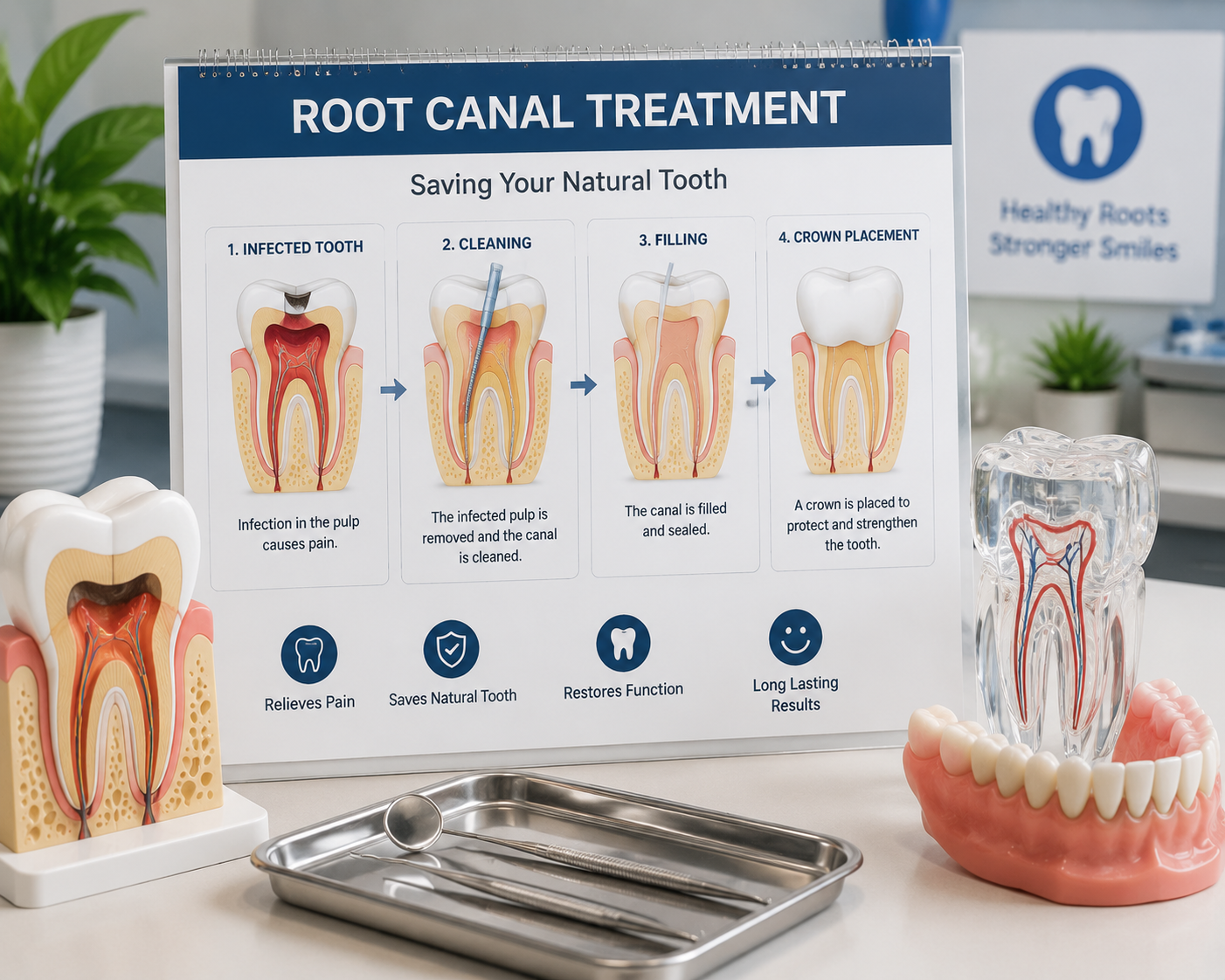
Root canal treatment addresses this by removing the inflamed or infected pulp tissue from inside the tooth, cleaning and disinfecting the canals, and then filling and sealing them to prevent reinfection. Depending on the tooth and how much structure remains, a final restoration — often a crown — may be recommended afterward to protect and strengthen it. The overall goal is to eliminate the source of infection while preserving the natural tooth whenever that's a reasonable option.
10 Warning Signs You May Need a Root Canal
-
Persistent or Severe Tooth Pain
A toothache that comes and goes briefly is different from one that lingers for days or keeps you up at night. Severe tooth pain that interferes with sleep, eating, or daily activities is one of the more recognizable signs you need a root canal, since it can indicate inflammation or infection deep inside the tooth. Pain of this intensity is worth having examined rather than managed indefinitely with painkillers.
-
Prolonged Sensitivity to Hot or Cold
Brief sensitivity to something cold or hot that fades within a few seconds is common and often not serious. It's when that sensitivity lingers after the stimulus is gone — a dull ache that continues well after you've finished a hot drink, for instance — that it becomes one of the more notable root canal symptoms, potentially pointing to inflamed pulp tissue rather than simple enamel wear.
-
Pain While Chewing or Biting
Tenderness or sharp pain when biting down can stem from several causes, including a cracked tooth, a loose filling, or gum issues, as well as pulp-related problems. It doesn't automatically mean root canal treatment is needed, but pain localized to one tooth during chewing is a useful detail to bring up during a dental examination.
-
Swollen or Tender Gums
Localized swelling or tenderness in the gum tissue around a specific tooth, rather than generalized gum irritation, can be a sign of infection spreading from the tooth's root. This kind of tooth infection symptom shouldn't be dismissed as ordinary gum sensitivity, especially if it doesn't resolve with better brushing or flossing.
-
A Pimple or Abscess on the Gum
A small, pimple-like bump on the gum — sometimes referred to as a gum boil — can be a dental abscess, a pocket of infection that may occasionally drain fluid. Its presence usually indicates that infection has reached beyond the tooth into the surrounding tissue and calls for prompt professional dental care.
-
Tooth Discoloration
A tooth that appears grey, dark, or noticeably different in shade from the teeth around it can sometimes indicate pulp damage, particularly if there's a history of trauma. Discoloration alone doesn't confirm that a root canal is necessary, since teeth can darken for other reasons too, but it's worth mentioning to your dentist.
-
Sensitivity That Develops or Worsens Over Time
Sensitivity that was mild or occasional but has gradually become more frequent or intense is different from sensitivity that's stayed the same for years. A changing symptom pattern — even if it's not dramatic — is generally more meaningful clinically and worth evaluating before it progresses.
-
Swelling of the Face or Jaw
Swelling that extends beyond the gum into the face or jaw is a more significant sign, often associated with a spreading dental infection. If facial or jaw swelling is increasing rapidly, or is accompanied by difficulty breathing, difficulty swallowing, or a general feeling of being seriously unwell, this requires urgent professional medical or dental attention without delay.
-
Previous Dental Trauma
A tooth that was hit during a fall, sports injury, or accident can develop pulp damage even if it looked fine at the time. Symptoms don't always appear immediately — sometimes discoloration, sensitivity, or discomfort shows up weeks or months later. Mention any history of trauma during a dental visit, even if the tooth currently feels normal.
-
A Deep Cavity or Large Dental Filling
Untreated decay that's allowed to progress, very deep cavities, or teeth that have undergone extensive restorations or repeated dental procedures are more likely to develop pulp complications over time. This doesn't mean every deep filling will eventually need a root canal, but these teeth are worth monitoring more closely.
Root Canal Symptoms vs Normal Tooth Sensitivity
| Symptom | Temporary Sensitivity | Possible Root Canal Concern |
|---|---|---|
| Cold sensitivity | Brief | Lingering |
| Hot sensitivity | Brief | Persistent |
| Toothache | Occasional | Persistent or severe |
| Chewing | Usually normal | Painful |
| Swelling | Usually absent | May occur |
| Gum abscess | Absent | May occur |
| Tooth colour | Usually unchanged | May darken |
What Causes a Tooth Infection?
- Deep tooth decay: Cavities left untreated can progress through the enamel and dentin until bacteria reach the pulp.
- Cracked or damaged teeth: A crack, even a small one, can create a pathway for bacteria to enter the inner tooth structure.
- Dental trauma: A blow to a tooth can damage the pulp's blood supply, sometimes leading to infection even without a visible crack.
- Repeated dental procedures: Teeth that have undergone multiple fillings or restorations over the years are more prone to pulp irritation.
- Untreated dental infection: An existing infection that isn't addressed can spread further into the tooth and surrounding tissue over time.
In each case, bacteria essentially find a route to the dental pulp, where the body's inflammatory response to that infection is what produces many of the tooth infection symptoms described above.
Can a Tooth Infection Go Away on Its Own?
A bacterial infection inside a tooth generally shouldn't be expected to resolve permanently without appropriate dental treatment. It's common for pain to temporarily ease, sometimes because an abscess has drained on its own or because the nerve inside the tooth has become less responsive — but this doesn't mean the underlying infection has gone away. Symptoms quieting down is not the same as the problem being resolved, which is why continued evaluation matters even if things seem to be improving.
What Happens If an Infected Tooth Is Left Untreated?
Left unaddressed, a tooth infection can lead to persistent or recurring pain, a dental abscess, localized swelling, and potential damage to the surrounding bone and gum tissue. In some cases, what could have been treated more conservatively earlier on ends up requiring more extensive treatment later, and in advanced situations, tooth loss becomes a possibility. The actual outcome varies depending on how severe the infection is and how soon it's evaluated, so this isn't meant to suggest a fixed or inevitable path — just a reason not to indefinitely postpone assessment.
Root Canal Treatment Procedure – Step by Step
- Dental examination — assessing your symptoms, medical history, and the affected tooth.
- Dental X-ray or appropriate imaging — confirming the extent of infection and the tooth's root structure.
- Local anaesthesia — numbing the area before treatment begins.
- Accessing the tooth — creating a small opening to reach the pulp chamber.
- Removing inflamed or infected pulp — clearing affected tissue from the canals.
- Cleaning and disinfecting the canals — thoroughly cleaning the space to reduce bacteria.
- Filling and sealing — filling the cleaned canals with a biocompatible material.
- Final restoration — placing a filling or crown, depending on the tooth's condition, to protect it going forward.
The exact steps and number of visits can vary depending on the tooth involved and the complexity of the case.
Is Root Canal Treatment Painful?
This is one of the most common concerns patients bring up, and it's a fair one. Modern root canal treatment is generally performed under local anaesthesia, with the specific goal of controlling pain while removing the source of infection or inflammation — in many cases, the procedure itself is aimed at relieving pain rather than causing it. Some tenderness in the days following treatment is fairly normal as the tissue settles, and following your dentist's post-treatment instructions helps manage this. It wouldn't be accurate to promise a completely pain-free experience for every patient, since individual sensitivity and case complexity differ.
Root Canal Recovery
After root canal treatment, mild tenderness around the tooth is common for a short period. It's generally advisable to avoid excessive chewing on the treated tooth until your dentist confirms it's ready, particularly before the final restoration is placed. Taking any prescribed medication as directed, maintaining regular oral hygiene, and attending follow-up appointments all support smooth root canal recovery. Completing the recommended final restoration — such as a crown, when advised — is an important part of protecting the tooth long-term rather than an optional add-on.
Root Canal Treatment Cost – What Determines the Price?
There's no single fixed price that applies to every root canal treatment, and it wouldn't be responsible to quote one without an examination. Cost is generally influenced by which tooth is affected, how many canals it has, the complexity and severity of the infection, how many appointments are needed, whether additional imaging is required, and the type of final restoration — a simple filling versus a crown, for example. Because these variables differ from patient to patient, it's best to ask for a complete, itemized treatment estimate after a clinical examination rather than comparing clinics based only on a starting price for root canal cost.
When Should You See a Dentist?
- Persistent or severe tooth pain
- Pain while chewing
- Prolonged sensitivity to hot or cold
- Gum or facial swelling
- Tooth discoloration
- A dental abscess
- History of dental trauma to a tooth
- A deep cavity that hasn't been evaluated recently
If any of these apply to you, scheduling a dental consultation in Banashankari is a reasonable next step, since root canal treatment in Banashankari — if it turns out to be needed — is far more manageable when addressed early rather than after symptoms have progressed.
Why Early Dental Evaluation Matters
Catching a problem early generally means more options: a better chance of preserving the natural tooth, clearer identification of whether infection is present, and a treatment plan that can be tailored before things become more complicated. Early evaluation also makes discomfort easier to manage. Early treatment doesn't guarantee that complications will never occur — some cases are more complex than others regardless of timing — but it generally puts you and your dentist in a better position to address the issue effectively.
Root Canal Treatment in Banashankari
If you're researching root canal treatment in Banashankari, a few practical things are worth checking before choosing a clinic. Look for dental professionals with genuine experience in endodontic treatment, since accurate diagnosis and careful canal cleaning make a real difference to outcomes. Proper imaging, visible sterilization and infection-control standards, and a dentist who takes the time to explain your treatment plan clearly are all good signs. Transparent communication about cost, a structured follow-up process, and access to restorative treatment — such as crowns — after the root canal is completed also matter, since a root canal is rarely the final step on its own. A root canal dentist in Banashankari who addresses each of these points can give you more confidence that your case is being handled carefully rather than routinely.
Conclusion
Recognizing the ten warning signs covered here — from persistent pain and lingering sensitivity to swelling, discoloration, and a history of trauma — can help you decide when a tooth deserves a closer look rather than being managed with painkillers alone. None of these symptoms confirm on their own that root canal treatment is necessary; that determination depends on a proper clinical examination and, when appropriate, an X-ray. What matters most is not waiting too long once persistent or worsening symptoms appear, since earlier evaluation generally means more comfortable, more predictable treatment.
If you've been noticing any of these signs, scheduling a dental consultation in Banashankari is a reasonable next step to get a clear answer specific to your tooth. Whether the outcome is root canal treatment in Banashankari or a simpler form of care, a proper examination is the only way to know for sure what your tooth actually needs.
Frequently Asked Questions
Common signs include persistent or severe tooth pain, prolonged sensitivity to hot or cold, pain while chewing, swollen or tender gums, a pimple-like bump on the gum, and tooth discoloration. These signs don't confirm the need for a root canal; a dentist must examine the tooth and typically take an X-ray.
Not always. Severe pain can stem from deep decay, a cracked tooth, gum disease, or sinus pressure, as well as pulp infection. Only a clinical examination and imaging can determine whether root canal treatment is appropriate.
Symptoms can include persistent pain, localized gum swelling, a gum abscess, prolonged temperature sensitivity, tooth discoloration, and, in advanced cases, facial or jaw swelling.
Generally, no. Pain may temporarily lessen if an abscess drains or the nerve becomes less responsive, but the underlying bacterial infection usually still requires dental treatment.
Root canal treatment is generally performed under local anaesthesia and aims to relieve pain caused by infection or inflammation. Some tenderness afterward is common and usually manageable with your dentist's guidance.
Some root canals are completed in one visit, while others require two or more appointments, particularly for teeth with multiple canals or significant infection. Your dentist can estimate this after examination and X-ray.
After numbing the area, the dentist opens the tooth, removes infected pulp, cleans and disinfects the canals, then fills and seals them. A final restoration, often a crown, may be placed afterward.
Mild tenderness for a few days is common and usually improves gradually. Most patients resume normal activities quickly but should avoid heavy chewing on the tooth until advised, especially before the final restoration.
Cost depends on the tooth, number of canals, infection severity, appointments required, and final restoration. A clinical examination is needed before a complete treatment estimate can be provided.
Schedule a consultation for persistent or severe pain, prolonged sensitivity, chewing pain, gum or facial swelling, an abscess, discoloration, previous trauma, or a deep unmonitored cavity.