
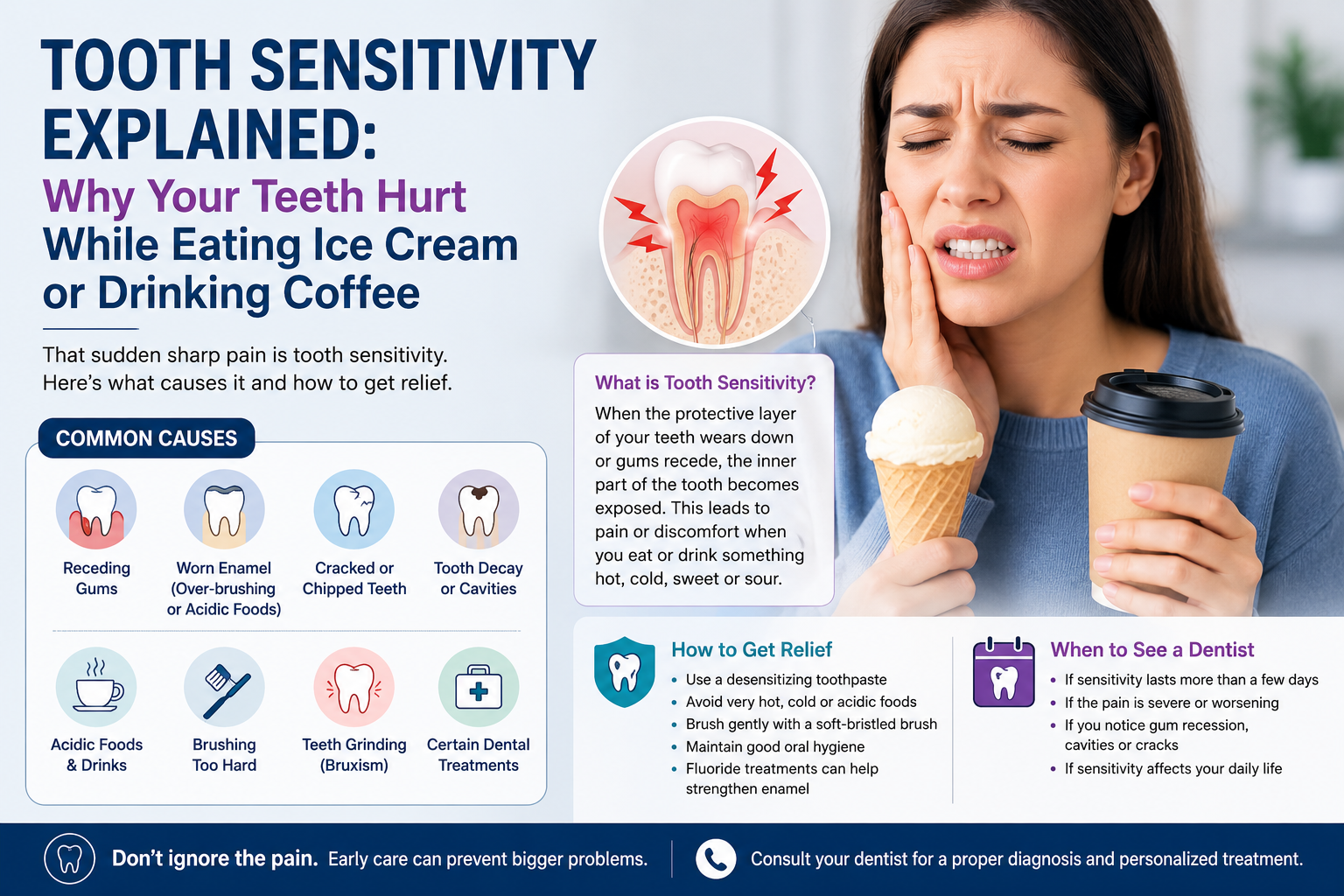
Tooth Sensitivity Explained: Why Your Teeth Hurt While Eating Ice Cream or Drinking Coffee
That sudden, sharp jolt when a spoonful of ice cream touches your teeth, or the sting from a hot cup of coffee, is a feeling many people brush off as normal. In reality, tooth sensitivity happens when the protective layers of your teeth are compromised, exposing the sensitive inner structure to temperature, sweetness, or acidity. Both cold and hot foods trigger pain because they reach nerve endings that are normally shielded by enamel and gum tissue.
While an occasional twinge might seem minor, sensitivity that keeps recurring is a signal worth listening to. It can point to anything from mild enamel wear to a more serious issue like a cavity or a cracked tooth. Identifying the underlying cause early is the key difference between a simple fix and a more complicated, expensive treatment later on.
If you've been searching for reliable tooth sensitivity treatment in Bangalore, understanding why this happens is the first step. Whether you're looking for a dentist near Bannerghatta Road or elsewhere in the city, a proper evaluation can identify exactly what's causing your discomfort and how to resolve it for good.
What Is Tooth Sensitivity?
Under normal circumstances, enamel on the crown of your tooth and cementum along the root protect the dentin layer underneath. When either of these protective layers wears away or recedes, dentin becomes exposed to the outside environment.
Temporary sensitivity — for example, right after a teeth whitening session or a dental cleaning — usually resolves within a few days. Chronic sensitivity that persists for weeks, however, typically indicates an ongoing issue such as enamel erosion, gum recession, or tooth decay that needs professional attention rather than time to heal on its own.
Why Do Teeth Hurt While Eating Ice Cream or Drinking Coffee?
Cold Foods Stimulate Exposed Nerves
When dentin is exposed, cold foods like ice cream cause the fluid inside the dentin tubules to shift rapidly, which stimulates nerve fibers and produces a sharp, brief pain.
Hot Beverages Trigger Pain
Heat from coffee or tea causes a similar fluid movement within the tubules, though the pain from hot triggers can feel more like a lingering ache rather than a quick jolt.
Sweet Foods Cause Discomfort
Sugary foods can draw fluid out of the dentin tubules through osmosis, irritating the nerve and causing sensitivity, especially in teeth with worn enamel.
Acidic Foods Worsen Sensitivity
Citrus fruits, soft drinks, and vinegar-based foods gradually soften and erode enamel, making teeth pain while eating cold food or acidic snacks more frequent over time.
Temperature Changes Affect Dentin
Rapid shifts between hot and cold, such as sipping coffee then drinking ice water, can intensify discomfort because the dentin tubules are repeatedly triggered in quick succession.
Common Causes of Tooth Sensitivity
Sensitive teeth causes vary widely, and identifying the right one is essential for effective treatment.
| Cause | What's Happening |
|---|---|
| Enamel erosion | Acidic foods and drinks or aggressive brushing wear away protective enamel |
| Gum recession | Gums pull back, exposing sensitive tooth roots |
| Tooth decay | Cavities break down enamel and reach the dentin or nerve |
| Worn fillings | Aging or cracked fillings allow temperature and bacteria to reach the nerve |
| Cracked teeth | Fractures expose inner tooth structure to triggers |
| Teeth grinding (bruxism) | Grinding wears down enamel over time, especially during sleep |
| Recent teeth whitening | Whitening agents can cause temporary sensitivity that fades within days |
| Tooth sensitivity after filling | Mild, short-term sensitivity is common as the tooth adjusts, but persistent pain needs evaluation |
| Gum disease | Inflammation and infection can expose roots and irritate nerves |
| Exposed tooth roots | Roots lack enamel, so once exposed they are naturally more sensitive |
Is Tooth Sensitivity a Sign of a Serious Dental Problem?
Sometimes, yes. While mild sensitivity is often manageable with home care, sensitivity linked to cavities, cracked teeth, gum disease, a root infection, or nerve damage requires prompt dental attention. Sharp pain that lingers well after the trigger is removed, or pain combined with swelling or throbbing, often signals a deeper problem such as an infected nerve that won't resolve without professional treatment. Ignoring these signs can allow a minor issue to progress into a root canal or, in severe cases, tooth loss.
How Dentists Diagnose Tooth Sensitivity
Diagnosing tooth sensitivity accurately requires more than guesswork. A clinical examination allows the dentist to inspect enamel wear, visible decay, and gum health, while dental X-rays reveal hidden decay, bone loss, or issues beneath the gumline that aren't visible to the eye. A bite evaluation checks whether uneven pressure or grinding is contributing to wear, and a gum examination assesses recession or inflammation. Cold sensitivity testing helps pinpoint the exact tooth and nerve response involved. This thorough approach is a core part of accurate tooth sensitivity treatment in Bangalore, ensuring the plan targets the real cause rather than just masking symptoms.
Effective Treatments for Tooth Sensitivity
Desensitizing Toothpaste
Recommended for mild cases, these toothpastes contain compounds that block pain signals from reaching the nerve over a few weeks of regular use.
Fluoride Treatment
Professional fluoride application strengthens weakened enamel and reduces nerve sensitivity, ideal for early-stage erosion.
Dental Bonding
A tooth-colored resin is applied to exposed root surfaces or minor defects, sealing off sensitive areas effectively.
Gum Grafting
For significant gum recession exposing tooth roots, grafting restores gum coverage and reduces long-term sensitivity.
Dental Fillings
Replacing worn or aging fillings resolves sensitivity that stems from a compromised seal around the tooth.
Dental Crowns Bangalore
For cracked or heavily worn teeth, dental crowns in Bangalore provide full-coverage protection, restoring strength and eliminating trigger exposure.
Root Canal for Sensitive Teeth
When sensitivity results from nerve inflammation or infection, a root canal for sensitive teeth removes the damaged nerve tissue, permanently resolving pain that other treatments can't reach.
Night Guards for Teeth Grinding
A custom night guard protects enamel from further wear in patients whose sensitivity is driven by bruxism.
How can tooth sensitivity be treated?
Treatment depends on the cause. Mild cases often respond to desensitizing toothpaste or fluoride treatment, while structural issues may need dental bonding, crowns, or gum grafting. Sensitivity from nerve damage or infection typically requires a root canal. A dental evaluation determines which option best resolves your specific type of sensitivity.
Home Remedies That May Help Reduce Tooth Sensitivity
These supportive measures can ease mild sensitivity, but they are not replacements for professional treatment when an underlying dental problem exists:
- Use a soft-bristle toothbrush
- Switch to a fluoride toothpaste
- Practice proper, gentle brushing technique
- Avoid acidic drinks like soda and citrus juices
- Reduce sugary foods that irritate exposed dentin
- Wear a night guard if you grind your teeth
- Maintain consistent daily oral hygiene
When Should You Visit a Dentist?
Some situations call for prompt dental care rather than waiting it out. Visit a dentist if you experience:
- Sensitivity lasting more than a few days
- Pain while eating that disrupts daily life
- Sensitivity that develops or worsens after a dental filling
- Sharp or lingering pain with hot drinks
- Bleeding gums alongside sensitivity
- Visible swelling near a tooth
- A broken or chipped tooth
If any of these apply, don't wait for the discomfort to worsen. A dentist near Bannerghatta Road or elsewhere in the city can quickly identify whether you need tooth sensitivity treatment in Bangalore or a more specific intervention.
How to Prevent Tooth Sensitivity
Consistent preventive dentistry habits go a long way toward keeping enamel strong and gums healthy:
- Brush gently with a soft-bristle brush
- Use fluoride toothpaste daily
- Floss once a day to protect gum health
- Avoid excessive or unsupervised teeth whitening
- Wear a mouth guard if you grind your teeth at night
- Reduce acidic foods and drinks in your diet
- Schedule regular dental checkups
- Get professional cleanings every six months
Why Early Treatment Matters
Addressing tooth sensitivity early prevents minor issues from turning into root infections that require more invasive care. It also avoids the expensive treatments that come with delayed diagnosis, protects remaining enamel from further wear, and helps preserve your natural teeth for longer. Beyond the clinical benefits, resolving sensitivity simply improves quality of life — letting you enjoy your morning coffee or a scoop of ice cream without wincing. Choosing prompt tooth sensitivity treatment in Bangalore is a small step that prevents much bigger problems down the road.
Conclusion
Tooth sensitivity has many possible causes, from enamel erosion and gum recession to decay, worn fillings, and teeth grinding. The pain you feel while eating ice cream or sipping coffee is your teeth signaling that their protective layers have been compromised in some way.
The good news is that most cases are treatable, especially when caught early. Options range from simple desensitizing toothpaste and fluoride treatments to more targeted solutions like bonding, crowns, gum grafting, or root canal therapy, depending on the underlying cause.
If cold, hot, sweet, or acidic foods have become a source of dread rather than enjoyment, don't wait. Schedule a consultation for tooth sensitivity treatment in Bangalore today, and let an experienced dentist near Bannerghatta Road identify the cause and get you back to enjoying your favorite foods pain-free.
Frequently Asked Questions
Ice cream triggers pain when dentin — the layer beneath your enamel — is exposed due to enamel erosion, gum recession, or decay. Cold temperatures cause fluid inside microscopic dentin tubules to shift rapidly, stimulating the nerve and producing a sharp, sudden ache. If this happens consistently, it's worth having a dentist evaluate the underlying cause rather than simply avoiding cold foods.
Heat causes the same fluid movement within exposed dentin tubules as cold triggers do, though the resulting pain often feels more like a lingering ache. This usually indicates worn enamel, a cracked tooth, an aging filling, or possible nerve inflammation. Persistent sensitivity to hot drinks should be checked by a dentist, especially if the discomfort lasts well after you finish drinking.
The most common causes include enamel erosion from acidic foods or aggressive brushing, gum recession exposing tooth roots, tooth decay, worn or aging fillings, cracked teeth, teeth grinding, and recent teeth whitening. Gum disease and exposed tooth roots are also frequent contributors. A dental exam helps pinpoint which of these factors is responsible for your specific symptoms.
Mild, short-term sensitivity after a filling is common and usually fades within one to two weeks as the tooth adjusts. However, if sensitivity is severe, worsens over time, or persists beyond a few weeks, it may indicate the filling is too high, there's inflammation in the nerve, or additional decay is present. Any prolonged discomfort should be reassessed by your dentist.
A root canal for sensitive teeth becomes necessary when the inner nerve tissue is inflamed, infected, or damaged beyond the point where fillings or bonding can help. Signs include lingering pain after hot or cold exposure, spontaneous throbbing, or sensitivity paired with swelling. This treatment removes the compromised nerve tissue and effectively eliminates the source of sensitivity permanently.
Yes, dental crowns in Bangalore are commonly used for teeth with significant cracks, wear, or large fillings that have made them sensitive. A crown fully covers the tooth, sealing off exposed dentin and protecting it from further temperature and pressure triggers, offering a durable, long-term solution when bonding or fillings alone aren't sufficient.
You can reduce mild sensitivity by using a soft-bristle toothbrush, switching to fluoride toothpaste, brushing gently, avoiding acidic foods and drinks, cutting back on sugar, and wearing a night guard if you grind your teeth. These habits support enamel health but work best alongside, not instead of, a professional evaluation if sensitivity persists.
Visit a dentist if sensitivity lasts more than a few days, worsens after a filling, causes pain while eating, or comes with bleeding gums, swelling, or a broken tooth. These signs often point to an underlying issue such as decay, infection, or a cracked tooth that needs proper diagnosis rather than continued home management.