
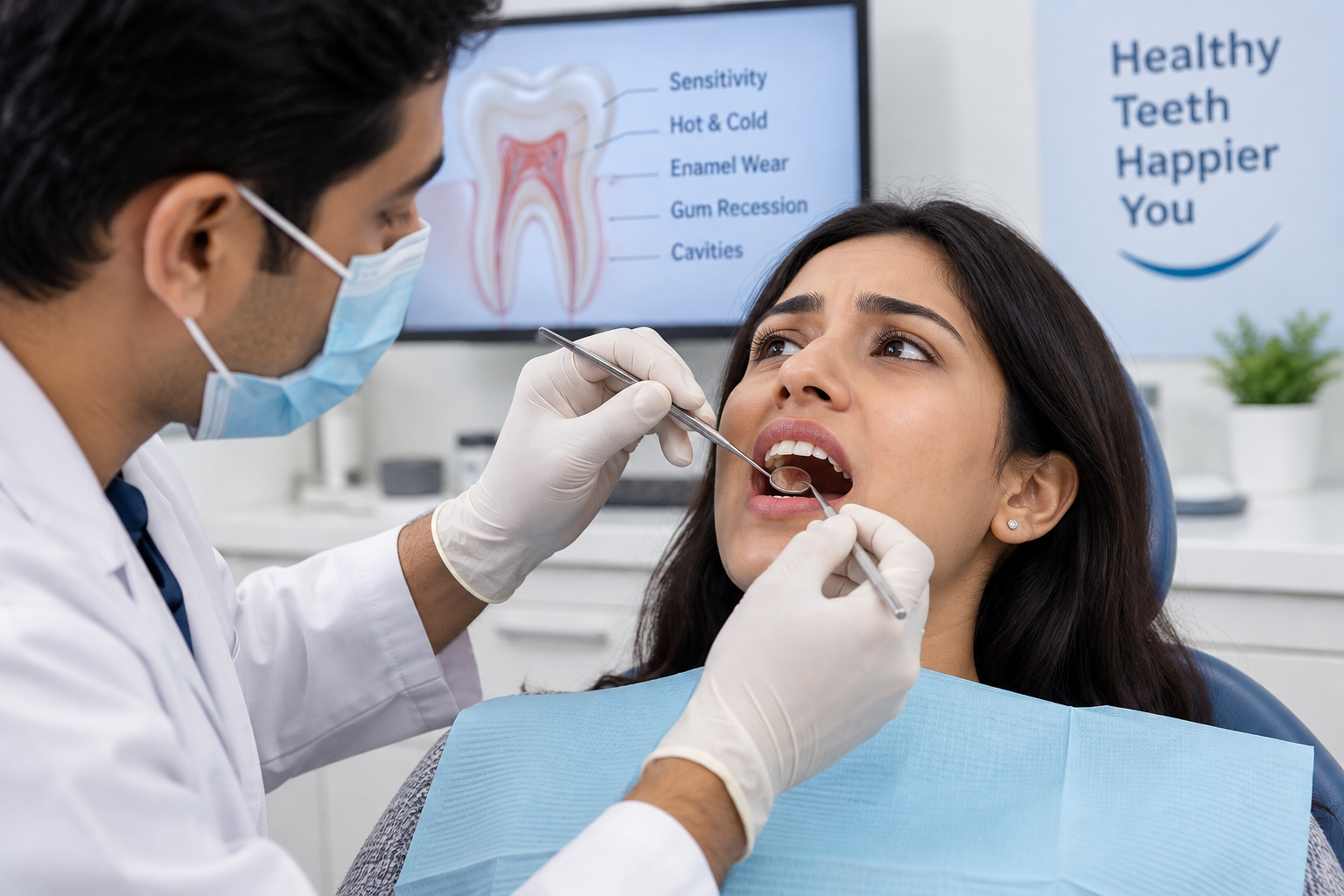
Why Do My Teeth Hurt When I Eat Something Cold or Hot?
That wincing moment when you bite into an ice cream scoop or sip on a piping hot beverage catches many of us off guard. While for some this may be an occasional occurrence that subsides on its own, for many this is an uncomfortable problem. This sudden discomfort is referred to as tooth sensitivity and occurs when the enamel layer of the teeth is compromised leading to a nerve irritation and reaction to hot and cold.
While occasional minor sensitivity is often a harmless occurrence, frequent and severe sensitivity is usually an indicator of a bigger problem and should be addressed to prevent further complications.
If you've been wondering about your sensitive teeth and are seeking treatment options or the Best Dentist in Bannerghatta Road, this guide walks you through the common causes, symptoms, treatment and prevention options to help you deal with this everyday annoyance.
What Is Tooth Sensitivity?
Tooth sensitivity or sensitive teeth refer to a sharp pain in response to hot or cold foods and drinks. Some people may also experience this while brushing or flossing their teeth.
To understand what causes tooth sensitivity, it is important to have an understanding of the anatomy of a tooth. The teeth are primarily composed of three substances and layers: The hard and resilient outer layer enamel, the dentin and the innermost layer pulp which contains the nerve endings. The enamel layer is the key to preventing tooth sensitivity. The dentin layer right below the enamel contains tiny tubes that lead to the nerve endings of the tooth. These tubes are sealed by the enamel, however when this protective layer is eroded, the dentin becomes exposed and can cause tooth sensitivity to hot and cold temperatures. Tooth sensitivity differs from a dull, constant toothache, which is usually caused by another problem.
In most cases, this sharp pain as a result of dentin exposure is usually short lived and disappears as soon as the irritant is removed.
Why Do My Teeth Hurt When I Eat Something Cold or Hot?
Teeth hurt when eating something cold or hot due to erosion of enamel layer or receding gums that expose the roots of the teeth. Enamel loss exposes the dentin layer causing a painful nerve reaction when the mouth is exposed to hot or cold food or drinks. This is a pretty common occurrence and can have a variety of causes.
Some causes can occur gradually over time while some sensitivity triggers are sudden and sometimes unpredictable. Some of the most common causes of sensitive teeth include:
- Erosion of enamel layer
- Gum recession
- Tooth decay or cavities
- Cracked teeth
- Worn out fillings
- Aggressive brushing
- Teeth grinding and clenching
- Sensitivity after dental cleaning or treatment
- Exposure of tooth roots
If you have been often wondering why do my teeth hurt when I eat something cold or hot, or why do my teeth hurt when I drink cold water, there is likely a combination of these factors that apply to your situation. The best way to find a long term solution is to first figure out what is causing your sensitive teeth.
Common Tooth Sensitivity Causes
Enamel Erosion
While enamel is the strongest substance in the human body, it is not indestructible. Exposure to highly acidic content in foods and drinks can cause gradual erosion of the enamel layer. Acidic food and drinks include citrus fruits, sodas and vinegar. Also patients having severe gastritis can have generalised erosion of teeth.This exposes the dentin and causes tooth sensitivity.
Gum Recession
Gums play a large role in protecting the roots of the teeth from extreme temperatures. Gum recession exposes sensitive roots and is commonly caused by periodontal disease, aging, and aggressive brushing.
Decay and Cavities
Cavities develop when tooth decay reaches the dentin and can expose the nerve. Tooth sensitivity to hot or cold items may develop, especially if the cavity is located on a front tooth.
Cracked Teeth
Cracked teeth allow germs to invade the tooth and cause infections and toothaches. A tooth that has a crack can cause a sudden, sharp pain when biting on something hard.
Bruxism or Teeth Grinding
Grinding teeth at night puts an extraordinary pressure on the teeth and can cause micro cracks that lead to tooth sensitivity.
Aggressive Brushing
Aggressive brushing not only damages the gums but can also wear away the enamel especially if a hard bristle toothbrush is used.
Dental Treatment
Sometimes teeth becomes sensitive as a result of a recent dental treatment. This usually clears up after a few days or weeks, but if the sensitivity persists it's best to see your dentist.
Early Warning Signs Of Sensitive Teeth
Recognizing the early warning signs of sensitive teeth can help you identify the cause and find treatment sooner rather than later. Some of the most common signs and symptoms include:
- Sharp pain when drinking cold water or eating cold foods
- Pain when eating ice cream or other frozen foods
- Pain or discomfort when drinking hot beverages like tea or coffee
- Pain when eating or drinking something sweet
- Spikes or short bursts of pain which dissipate quickly
- Pain while brushing or flossing
- Tenderness near the gum
- Increasing sensitivity which has a negative effect on your quality of life
In most cases the above symptoms will be sporadic and only occur occasionally. If they tend to appear more regularly, it's best to see your dentist to find the root cause.
When Is Tooth Sensitivity An Indicator Of A Bigger Problem?
Some problems with teeth may present similar symptoms as sensitive teeth, however there are certain warning signs which should prompt an immediate visit to the dentist. Most of these signs indicate an underlying problem which needs to be addressed.
The following are some of the most common signs which indicate that there is more to the situation than meets the eye:
- Pain that lingers or persists even after the hot or cold stimulus is removed
- Severe tooth pain
- Pain that appears without an obvious cause
- Pain or discomfort when chewing
- Swelling of the gums or face
- Gum abscesses or bleeding
- Cavities or dark spots on the teeth
- Tooth discolouration
- Fever
The above are all symptoms that should prompt an immediate visit to the dentist to rule out a more serious condition.
How Is Tooth Sensitivity Assessed?
- A dentist will perform a few tests to ascertain the cause of the sensitive teeth. Most of them are local examination of hard and soft tissues and few tests. These include: Vit C levels, blood sugar levels,etc
- Going through a patient's medical history.
- Asking specific questions relating to the cause of the sensitivity. The dentist may ask about what specific foods or drinks trigger the pain.
- Completing a comprehensive oral exam to look for signs of exposed roots, gingivitis, plaque, calculus or enamel cracks.
- Testing the bite by asking the patient to bite down on a special paper.
- Taking x-rays of the affected teeth if necessary.
It's important to have the exact cause identified so as to deal with the problem effectively.
How Is Tooth Sensitivity Treated?
The treatment for sensitive teeth depends on what is causing the sensitivity, which is why it's important to see a dentist for an accurate diagnosis before pursuing any treatment. In most cases, treatment revolves around repairing and restoring teeth that have been damaged. Some of the most common treatments for sensitive teeth include:
Desensitizing Toothpaste
This toothpaste works by blocking the nerve reactions in the teeth. While it doesn't work for everyone, it's effective for some people and should be used regularly for best results.
Fluoride Treatment
Your dentist may recommend fluoride treatment to repair damaged enamel.
Treatment for Gum Recession
The exact treatment for gum recession depends on the cause and how severe it is. Your dentist will recommend the most effective treatment option.
Dental Fillings
Dental fillings are used to repair cavities and can often help in eliminating sensitive teeth.
Dental Crowns
Crowns are used for extensive dental fillings and can also help in eliminating sensitive teeth.
Root Canal Treatment
If the sensitive teeth are as a result of a seriously infected tooth, root canal treatment may be recommended.
Treatment for Cracked Teeth
Cracked teeth need to be assessed by a dentist before any treatment can be administered.
If you are looking for sensitive teeth treatment near Bannerghatta Road, it's important to remember that each case is unique and requires individual assessment to identify the most effective treatment.
How To Prevent Tooth Sensitivity?
It is not usually possible to prevent enamel erosion, cracks or gum recession, but there are a number of things that you can do to significantly reduce the risk of developing sensitive teeth. These include:
- Using a soft toothbrush
- Avoiding aggressive brushing
- Using fluoride toothpaste
- Taking care when eating highly acidic foods and drinks
- Limiting intake of extremely hot or cold foods and drinks
- Avoiding brushing just after consuming acidic foods and drinks as this can accelerate enamel erosion
- Using a night guard if you grind your teeth
- Avoiding tobacco use
- Visiting the dentist for a checkup and cleaning at least once a year
- Treating cavities and gum problems as soon as possible
- Maintaining good oral hygiene
- Regular dental check ups
When looking at sensitive teeth prevention it's important to note that everything revolves around the two most important structures in sensitivity prevention: The enamel and the gums. Anything that can be done to protect and maintain these structures will significantly reduce the risk of developing sensitive teeth.
What Should I Do If My Teeth Hurt When Eating Cold Food?
If you are someone who often asks yourself the question, why do my teeth hurt when eating cold food, here are some of the things that you should do:
- Figure out what specifically triggers the discomfort so that you can avoid that particular food
- Avoid consuming food with extreme temperatures.
- Use a soft toothbrush
- Use desensitizing toothpastes as recommended by your dentist.
- Continue brushing your teeth normally
- Avoid treating sensitive teeth on your own. If the sensitivity persists or worsens, see your dentist for an accurate diagnosis and treatment.
It's important to see your dentist to identify the root cause and treat it.
Why Do My Teeth Hurt When I Drink Cold Water?
Cold water causing tooth pain is brought about by the same causes of sensitivity mentioned above. However there are two variations:
- Brief sensitivity: This refers to a brief, sharp pain that disappears almost as soon as the cold water has left the mouth. It usually indicates that the dentin layer or tooth roots have been exposed to the cold temperature and is generally harmless.
- Persistent sensitivity: This refers to sensitivity that occurs even after the cold water is gone. This is an indicator of an inflamed or infected tooth and should be brought to the attention of a dentist
If you find yourself constantly asking the question, why do my teeth hurt when I drink cold water, the best thing to do is to visit your dentist for an accurate diagnosis. A sharp, brief pain in response to drinking cold water is generally not a cause for alarm. However, persistent sensitivity or tooth pain that occurs without an obvious cause should be investigated.
When Should You See A Dentist?
While occasional sensitive teeth are not usually a cause for concern, it's best to see a dentist if:
- The sensitivity occurs frequently rather than occasionally
- The sensitivity is getting progressively worse
- The pain lingers or occurs for longer than a few seconds after the irritant is removed
- The sensitivity is localized to a single tooth
- You have pain when chewing or biting
- Your gums are inflamed, tender, or bleed easily
- A tooth has been damaged, chipped or discolored
- A filling or crown has come loose
- You have toothache when there is no apparent cause
- You have facial swelling or fever
Seeing the Best Dentist in Bannerghatta Road for a professional opinion will help you understand what is causing your sensitive teeth and ensure that it is not a symptom of something more serious.
Why Early Dental Consultation Is Important
Seeing a dentist early not only helps in eliminating the discomfort of sensitive teeth but also has a number of long term benefits. These include:
- Early detection and treatment of cavities
- Prevention of further enamel loss
- Early detection and treatment of cracks
- Prevention and treatment of gum recession reduces the likelihood that the problem will advance to a more serious condition
- Increases the chances of saving a tooth that would have otherwise been lost
- Improves treatment planning and outcomes
- Promotes overall oral health
Having your sensitive teeth assessed by a qualified dentist in Bannerghatta Road is the first step towards long term dental health.
CONCLUSION
Tooth sensitivity to hot or cold food is a common problem, but it should not be ignored. Teeth become sensitive to hot or cold food when the enamel layer is worn down or the gums recede exposing the roots of the teeth. There are a number of potential causes of tooth sensitivity including enamel loss, gum recession, cavities, cracks, teeth grinding and clenching as well as aggressive brushing. While occasional sensitivity is not usually a cause for concern, severe tooth sensitivity, frequent sensitivity and sensitivity that is accompanied by other problems should be brought to the attention of a dentist.
Preventive measures such as using a soft toothbrush, using desensitising toothpaste and practicing good oral hygiene can go a long way towards preventing sensitive teeth. However, if your teeth have been reacting adversely to hot or cold food or drinks it's best to visit the Best Dentist in Bannerghata Road to ascertain the cause and get it treated.
Frequently Asked Questions:
Cold water can trigger sharp tooth pain when the protective enamel has worn causing thinning of enamel or gums have receded, exposing the dentin layer beneath. Dentin contains microscopic tubules connected to the tooth's nerve, so cold temperatures traveling through these channels can cause a brief, sharp sensation. If the pain is fleeting, it may simply reflect mild sensitivity, but pain that lingers or worsens should be checked by a dentist to rule out cavities, cracks, or other underlying issues.
Similar to cold sensitivity, hot food or drinks can stimulate exposed dentin and irritate the nerve inside a tooth. This often happens due to enamel erosion, gum recession, or an untreated cavity. In some cases, hot sensitivity paired with lingering pain can indicate inflammation of the tooth's pulp, which may require further evaluation and, in some cases, root canal treatment.
The most common causes include enamel erosion from acidic foods, gum recession exposing tooth roots, tooth decay, cracked or damaged teeth, worn fillings, aggressive brushing habits, and teeth grinding. Sensitivity can also appear temporarily after certain dental procedures. Identifying the specific cause through a dental examination is essential for choosing the right treatment approach.
There is no single guaranteed permanent fix, since outcomes depend on the underlying cause and how well it responds to treatment. Addressing the root cause, whether through fillings, gum treatment, fluoride application, or other approaches, along with consistent oral hygiene, can significantly reduce or resolve sensitivity for many patients over time.
Tooth sensitivity can be a sign of a cavity, particularly if it is limited to one tooth or worsens with sweet foods in addition to hot or cold triggers. However, sensitivity can also result from other causes like enamel wear or gum recession. A dental examination, sometimes including an X-ray, is the most reliable way to confirm whether decay is present.
Using a soft-bristled toothbrush, brushing gently with fluoride toothpaste, limiting acidic foods and drinks, and avoiding brushing immediately after acidic meals can help manage mild sensitivity. Desensitizing toothpaste may also offer relief with regular use. These measures support prevention but do not replace a dental evaluation if sensitivity persists.
You should see a dentist if sensitivity is frequent, severe, worsening, or limited to a specific tooth, or if you experience pain when biting, swollen or bleeding gums, visible tooth damage, or pain without any temperature trigger. Prompt evaluation helps identify the cause early and prevents the issue from progressing.
The most suitable treatment depends entirely on the cause of the sensitivity. Options range from desensitizing toothpaste and fluoride treatment for mild cases to fillings, crowns, gum treatment, or root canal treatment for more advanced issues. A dentist offering sensitive teeth treatment @ Bannerghatta Road can assess your specific situation and recommend an appropriate plan.