
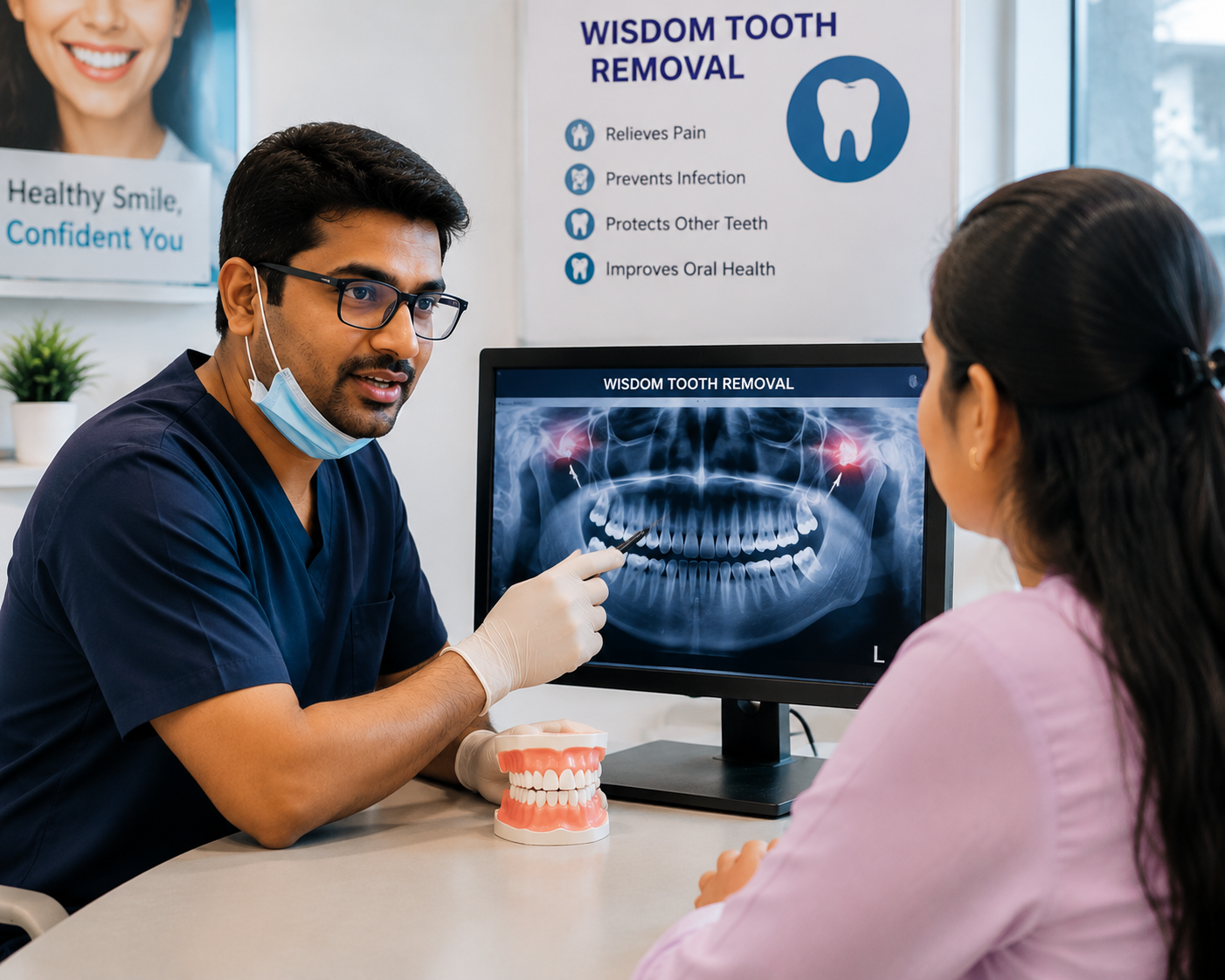
Wisdom Tooth Removal in JP Nagar: Symptoms, Surgery, Recovery & Cost
If you've been dealing with a dull ache at the back of your jaw, swollen gums near your last molar, or that odd sensation of a tooth trying to push through where there doesn't seem to be enough room, you've probably already searched for answers about wisdom teeth. Wisdom teeth are the last set of molars to develop, and for many people they arrive without enough space in the jaw to settle in properly. That's when problems like pain, swelling, or infection can start.
Not everyone who has a wisdom tooth needs it removed. The decision usually depends on the tooth's position, whether it's causing symptoms, how it looks on an X-ray, and whether it's affecting nearby teeth or gum health. This guide walks through what wisdom teeth are, the signs that suggest something needs attention, what impacted wisdom teeth mean, and what to realistically expect if extraction or surgery becomes necessary. If you're currently dealing with symptoms, a dental consultation in JP Nagar is the most reliable way to get a clear, individual answer rather than guessing based on general information online.
What Are Wisdom Teeth?
Wisdom teeth, also called third molars, are the last teeth to develop, typically positioned at the very back of the upper and lower jaws — one in each corner of the mouth, for a total of up to four. They usually begin emerging between the late teens and mid-twenties, though the exact timing varies quite a bit from person to person.
The trouble is that human jaws have often become smaller over generations, while wisdom teeth themselves haven't changed much in size. That mismatch means there's frequently not enough room for these molars to erupt fully or align properly with the rest of the bite. Some people have plenty of space and their wisdom teeth come in without any issue. Others find that the teeth get stuck partway, grow at an angle, or never break through the gum at all.
Does Every Wisdom Tooth Need Removal?
This is one of the most common misconceptions patients bring into a consultation: the idea that every wisdom tooth is automatically a problem waiting to happen. That isn't accurate. A wisdom tooth that has erupted fully, sits in a healthy position, bites correctly against the opposing tooth, and can be cleaned effectively during daily brushing may not need to be removed at all.
Removal may be considered when the tooth is associated with:
- Repeated or recurring pain
- Infection in the surrounding gum tissue
- Persistent gum inflammation around the tooth
- Decay in the wisdom tooth or the tooth next to it
- Damage or pressure being placed on an adjacent tooth
- A cyst or other abnormal finding on imaging
- Crowding or other structural dental concerns
- Ongoing difficulty keeping the area clean despite good oral hygiene
At the same time, a wisdom tooth that isn't causing symptoms may sometimes simply be monitored with periodic check-ups and X-rays rather than extracted right away. This decision always depends on clinical examination and imaging findings specific to your mouth — it isn't a one-size-fits-all rule, and a dentist in JP Nagar would need to assess your particular case before recommending a course of action.
Common Wisdom Tooth Symptoms
Wisdom tooth pain is often the first thing patients notice, but it isn't the only signal worth paying attention to. Common early signs include:
- Wisdom tooth pain at the back of the jaw
- Gum swelling near the last molar
- Jaw discomfort or a dull, radiating ache
- Red, tender, or bleeding gums
- Difficulty opening the mouth fully
- Pain while chewing on that side
- Bad breath that doesn't improve with brushing
- An unpleasant or bitter taste in the mouth
- Food repeatedly getting trapped in the area
- Visible swelling around the back tooth
- Recurrent infection in the same spot
- Trouble reaching the area with a toothbrush or floss
If any of these symptoms show up occasionally and then settle down, it's still worth mentioning during your next dental visit. Recurring episodes are usually a stronger sign that the tooth needs closer evaluation.
What Is an Impacted Wisdom Tooth?
An impacted wisdom tooth is one that hasn't been able to fully emerge into its normal position, usually because there isn't enough space in the jaw or because another tooth is blocking its path. Impaction happens in different directions, and the angle matters when planning treatment.
- Mesial impaction: The tooth is angled forward, tilting toward the second molar in front of it.
- Vertical impaction: The tooth is upright but still hasn't broken through the gum properly, often due to lack of space.
- Horizontal impaction: The tooth is lying on its side, growing sideways into the roots of the neighboring molar.
- Distal impaction: The tooth is angled backward, away from the second molar, toward the back of the jaw.
The only reliable way to know which type of impaction — if any — is present is through dental X-rays. Visual examination alone doesn't show the full picture of how the tooth is positioned beneath the gum and bone.
Problems an Impacted Wisdom Tooth Can Cause
An impacted wisdom tooth doesn't always cause symptoms immediately, but over time it can contribute to a number of issues. Partial eruption creates a flap of gum tissue that's difficult to clean, which allows food particles and bacteria to accumulate underneath — a common cause of infection and bad breath. Pressure from an impacted tooth against the neighboring molar can also lead to decay or resorption on that adjacent tooth. In some cases, tissue around a partially erupted wisdom tooth becomes chronically inflamed, and less commonly, a cyst or other pathology may form around the crown of an unerupted tooth. These risks are real but shouldn't be seen as inevitable — many impacted wisdom teeth are simply monitored for years without causing significant issues.
When Is Wisdom Tooth Extraction Recommended?
Several clinical situations commonly lead a dentist to recommend extraction:
- Repeated infection: When the gum tissue around a wisdom tooth becomes infected more than once, removal is often discussed to prevent further episodes.
- Persistent pain: Ongoing discomfort that doesn't resolve with basic care may point to an underlying problem that needs direct treatment.
- Tooth decay: Cavities in a wisdom tooth that's difficult to access and clean are often hard to treat conservatively.
- Damage to the adjacent tooth: Pressure from an impacted wisdom tooth can put the second molar at risk, which may justify removal of the wisdom tooth to protect it.
- Gum disease: Localized gum disease limited to the back molar area is sometimes best resolved by removing the source of irritation.
- Cysts or abnormal tissue: Imaging that shows a cyst or unusual tissue change around the tooth generally warrants further evaluation and, often, extraction.
- Problematic position: Certain impaction angles make the tooth more likely to cause ongoing issues with cleaning, adjacent teeth, or gum health.
- Orthodontic or dental planning: In some cases, wisdom teeth are removed to support orthodontic treatment plans or to prepare space for other dental work.
The final decision always requires a hands-on dental examination and appropriate imaging — no article can substitute for that assessment.
Simple Extraction vs Surgical Wisdom Tooth Removal
Simple wisdom tooth extraction is generally used when the tooth has fully erupted, is visible above the gumline, and can be accessed without needing to cut through gum tissue or bone.
Surgical wisdom tooth removal may be necessary when the tooth is impacted, only partially erupted, positioned deeply in the jaw, or otherwise difficult to access directly. This often involves a small gum incision and, in some cases, minor bone or tooth sectioning to remove it safely.
It's worth clarifying that the word "surgery" here doesn't mean something has gone wrong or that a serious complication is expected — it simply describes the technique needed based on how the tooth is positioned.
Wisdom Tooth Removal: Step by Step
- Consultation — discussing your symptoms, medical history, and concerns
- Dental examination — checking the tooth, gums, and surrounding area
- X-ray or imaging — confirming the tooth's exact position and root structure
- Treatment planning — deciding whether simple extraction or surgical removal is appropriate
- Local anesthesia — numbing the area completely before starting
- Tooth access — reaching the tooth, with a gum incision if required
- Tooth removal — extracting the tooth, sometimes in sections if needed
- Sutures when required — closing the gum tissue if an incision was made
- Post-operative instructions — guidance on care over the following days
- Follow-up — a review visit to check healing progress
More complex cases involving deep impaction or proximity to nerves may need additional imaging or referral for specialist assessment.
What Happens During Wisdom Tooth Surgery?
Once local anesthesia has taken effect, the treating dentist confirms the area is fully numb before proceeding. If the tooth is impacted or partially covered by gum tissue, a small incision may be made to access it. In select cases, a small amount of bone covering the tooth needs to be removed, or the tooth itself is gently sectioned into smaller pieces to allow safer, less invasive removal. Once the tooth is out, the socket is cleaned, and sutures are placed if the gum tissue needs to be closed. The exact steps depend entirely on how the tooth is positioned and how complex the case is — a fully erupted tooth requires a much simpler process than a deeply impacted one.
Is Wisdom Tooth Removal Painful?
This is one of the most common questions patients ask before their appointment, and it deserves a direct answer. Local anesthesia numbs the area before the procedure begins, so you shouldn't feel sharp pain while the tooth is being removed. You may notice pressure, movement, or vibration, which is normal and different from pain. Once the anesthesia wears off, some discomfort is expected — this is a normal part of healing rather than a sign that something went wrong. How much discomfort you feel, and for how long, varies from person to person, so it isn't accurate to promise a pain-free experience for everyone.
Wisdom Tooth Surgery Recovery
Recovery after wisdom tooth surgery is generally manageable with proper care, though it looks a little different for everyone. In the initial period, mild to moderate swelling and discomfort are common, and some patients notice temporary jaw stiffness that makes opening the mouth wide feel a little limited. Sticking to soft foods, following the oral hygiene instructions given at the clinic, and avoiding smoking or tobacco use all support smoother healing. Taking prescribed medication exactly as directed, rather than adjusting the dose yourself, is important for both comfort and infection prevention. A follow-up appointment lets your dentist check that healing is progressing as expected.
- First 24 hours: Some swelling, mild bleeding, and tenderness are typical. Resting, applying a cold compress as advised, and avoiding vigorous rinsing help manage this early stage.
- Days 2–3: Swelling can actually appear more noticeable during this window before it starts to improve — this is a normal part of the healing curve, not necessarily a sign of a problem.
- By the end of the first week: Most patients notice steady improvement in comfort and swelling, and this is often when a follow-up visit is scheduled to check healing.
- Following weeks: While the surface tissue usually looks healed within a couple of weeks, the deeper bone and gum tissue continue remodeling for some time afterward.
Recovery pace varies depending on whether the extraction was simple or surgical, how complex the impaction was, and individual healing factors — there's no single fixed timeline that applies to everyone.
What to Eat After Wisdom Tooth Removal
Soft, easy-to-chew foods are generally recommended in the first few days, such as soft rice, curd or yogurt, smooth soups that aren't very hot, mashed vegetables, soft scrambled eggs, oatmeal, and other smooth foods suited to your dietary preferences. During the initial healing period, it's usually best to avoid very hot foods, hard or crunchy items, sticky foods, alcohol, and smoking or tobacco, along with anything that could easily get lodged in the extraction site. Since individual instructions can vary based on your specific procedure, it's best to follow the exact dietary guidance given by your treating dentist rather than relying only on general advice.
What to Avoid After Extraction
- Smoking or using tobacco products
- Vigorous rinsing or spitting immediately after the procedure
- Strenuous physical activity in the first day or two
- Drinking through a straw if your dentist has advised against it
- Touching or poking the extraction site with your tongue or fingers
- Ignoring symptoms that seem to be getting worse rather than better
Always follow the specific post-operative instructions given by your dentist, since these can be tailored to your particular case.
Possible Risks and Complications
While most wisdom tooth removals proceed without significant issues, patients should be aware of potential complications, including dry socket, localized infection, prolonged bleeding, swelling beyond the expected range, temporary jaw stiffness, and temporary numbness in the lip, tongue, or chin. In select cases involving lower wisdom teeth positioned close to a nerve, nerve-related complications are possible, though not inevitable. The likelihood of any complication depends on the tooth's position, the complexity of the procedure, and individual healing factors. If symptoms seem to be worsening instead of gradually improving, contacting your dentist promptly is the right step rather than waiting it out.
When to Contact Your Dentist
Reach out to your dentist if you notice:
- Persistent or worsening severe pain
- Heavy or uncontrolled bleeding
- Swelling that keeps increasing after the first couple of days
- Fever
- Pus or significant discharge from the extraction site
- Difficulty swallowing
- Difficulty breathing
- Numbness that doesn't improve over time
- Any other signs that suggest infection
Difficulty breathing or severe swelling that appears to be affecting the airway is a medical emergency and requires urgent attention right away, not a wait-and-see approach.
Wisdom Tooth Removal Cost in JP Nagar
There's no single fixed price for wisdom tooth removal, and it wouldn't be accurate to quote one without an examination. Cost is influenced by several factors, including whether the tooth is fully erupted or impacted, how many wisdom teeth need to be removed, the complexity of the impaction, whether additional imaging is required, the type of anesthesia used, the overall surgical complexity, whether specialist input is needed, and any follow-up care involved. Because these factors vary from patient to patient, the most reliable way to understand wisdom tooth removal cost is to have a clinical examination and X-ray, after which a complete, itemized treatment estimate can be provided. If you're researching wisdom tooth removal in JP Nagar, it's reasonable to ask for this estimate upfront during your consultation.
How to Prepare for Wisdom Tooth Removal
- Tell your dentist about any existing medical conditions
- Share a full list of current medications and supplements
- Mention any known allergies, including to medications or anesthesia
- Follow fasting instructions if sedation or general anesthesia is planned
- Arrange transportation in advance if sedation may affect your ability to drive afterward
- Plan ahead for soft foods at home for the first few days
- Follow any specific pre-operative instructions given by the clinic
- Ask about post-operative pain management and medication before the day of the procedure
Choosing a Clinic for Wisdom Tooth Removal in JP Nagar
If you're comparing options for wisdom tooth removal in JP Nagar, a few practical factors are worth considering. Look for a clinic with qualified dental professionals who have specific experience handling wisdom tooth extractions, including impacted cases that require surgical technique. The ability to properly assess impacted wisdom teeth using appropriate diagnostic imaging matters just as much as the procedure itself, since treatment planning depends on an accurate picture of the tooth's position. Sterilization and infection-control standards, a clear explanation of your treatment options, transparent discussion of costs before treatment begins, and structured post-operative follow-up all contribute to a smoother overall experience. For more complex impactions, it also helps if the clinic can refer or coordinate with a specialist when needed. A dental clinic in JP Nagar that covers these points can give you confidence that your case is being handled thoughtfully rather than routinely.
When to Book a Consultation
It's worth booking a dental consultation in JP Nagar if you notice pain that persists or keeps returning, gum swelling near the back molar, difficulty opening your mouth comfortably, bad taste or bad breath that doesn't go away, food that repeatedly gets trapped in the same spot, fever or facial swelling, a wisdom tooth that's only partially erupted, or symptoms that make you suspect an impacted wisdom tooth. Over-the-counter painkillers may ease symptoms temporarily, but they don't address whatever is causing the pain in the first place — a dental examination is the only way to identify and treat the underlying issue.
Conclusion
Wisdom teeth don't automatically spell trouble — many people carry theirs without ever needing treatment, while others experience pain, infection, or impaction that calls for closer attention. Symptoms like persistent pain, gum swelling, or recurring infection are worth taking seriously, and an impacted wisdom tooth in particular needs proper imaging to understand its exact position before any decision is made. When extraction is recommended, it may be a simple procedure for a fully erupted tooth or a more involved surgical removal for an impacted one — neither path is automatically more serious than the other, and both are routine parts of dental care. Recovery generally improves steadily over the first week or two, though healing pace varies from person to person.
If you've been noticing wisdom tooth pain, swelling, or other symptoms described here, the most useful next step is a professional examination rather than guesswork. Scheduling a dental consultation in JP Nagar allows your dentist to review your specific symptoms, take the necessary X-rays, and explain whether wisdom tooth removal in JP Nagar is the right course of action for your particular case — or whether monitoring is a reasonable option for now.
Frequently Asked Questions
Removal is generally considered when a wisdom tooth causes repeated pain, infection, gum inflammation, decay, or damage to an adjacent tooth, or when X-rays reveal a cyst or problematic impaction. A wisdom tooth without symptoms and in a healthy, cleanable position may not require removal. Your dentist can determine this after a clinical examination and imaging, since every case is different.
Symptoms can include pain or pressure at the back of the jaw, gum swelling, redness, difficulty opening the mouth fully, bad breath, an unpleasant taste, food repeatedly getting trapped near the tooth, and recurring infection in the area. Some impacted wisdom teeth cause no noticeable symptoms and are only discovered through a routine dental X-ray during a check-up.
Local anesthesia is used to numb the area before the procedure, so sharp pain shouldn't be felt during removal itself, though you may notice pressure or movement. Some discomfort after the anesthesia wears off is normal and expected as part of healing. Pain levels vary between individuals, so a completely pain-free experience for everyone can't be guaranteed, but discomfort is generally manageable.
Recovery timelines vary depending on whether the extraction was simple or surgical. Many patients see noticeable improvement in swelling and discomfort within the first week, though deeper tissue healing continues for longer. Complex impacted cases may take somewhat longer to feel fully comfortable. Your dentist can give you a more specific expectation based on your procedure.
Yes, when a wisdom tooth is fully erupted, visible, and easily accessible, it can often be removed through a simple extraction rather than a surgical procedure. Surgical removal becomes necessary mainly when the tooth is impacted, partially erupted, or positioned in a way that makes direct access difficult, requiring a small incision or tooth sectioning.
Soft foods such as soft rice, curd or yogurt, mashed vegetables, smooth soups that aren't too hot, soft eggs, and oatmeal are generally suitable in the first few days. It's usually best to avoid hard, crunchy, sticky, or very hot foods, along with alcohol and tobacco, until your dentist confirms it's fine to return to your normal diet.
Procedure time depends on the tooth's position and complexity. A simple extraction of a fully erupted tooth is often relatively quick, while surgical removal of an impacted tooth can take longer due to the additional steps involved. Your dentist can give you a more accurate estimate after examining your specific case and reviewing your X-rays.
Possible complications include dry socket, infection, prolonged bleeding, swelling, temporary jaw stiffness, and temporary numbness, with nerve-related complications being an uncommon but possible risk in select lower wisdom tooth cases. These complications are not inevitable, and their likelihood depends on tooth position and individual factors. Contact your dentist promptly if symptoms worsen rather than improve.
Wisdom tooth removal cost depends on factors like whether the tooth is impacted, how many teeth need removal, imaging requirements, anesthesia type, and overall procedure complexity. Because pricing varies by case, it's best to have a clinical examination and X-ray first, after which a complete, transparent treatment estimate can be provided during your consultation.
You should book a consultation if pain persists, keeps returning, or is accompanied by gum swelling, difficulty opening your mouth, bad breath, food trapping, or fever. Painkillers may temporarily ease discomfort but don't treat the underlying cause. A dental examination and X-ray are needed to identify what's actually happening and determine the right next step.